
Desserts
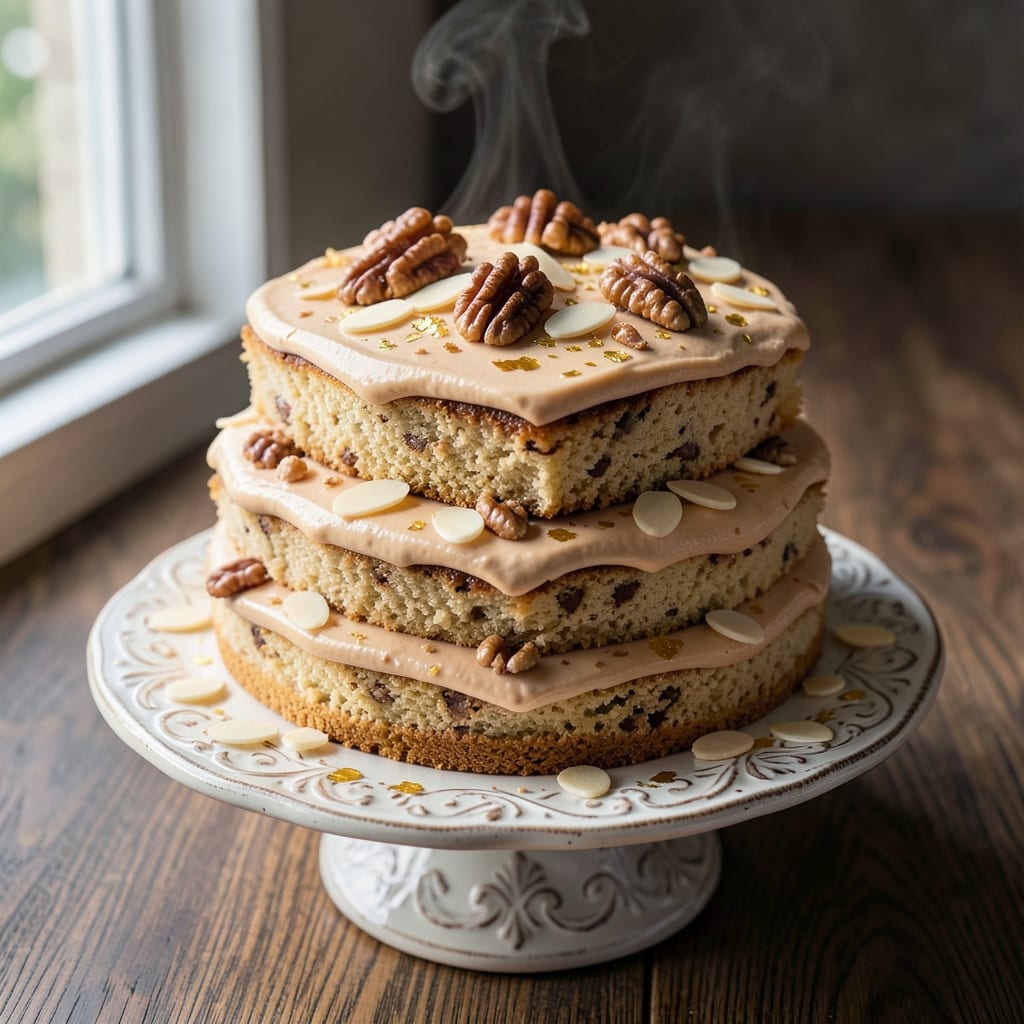
This almond and walnut cake delivers the perfect balance of moist vanilla layers and crunchy nutty texture that keeps every bite exciting. The secret lies in blending ground almonds and chopped walnuts throughout the batter, creating pockets of flavor and texture that elevate simple vanilla cake to something extraordinary. What makes this recipe special is how the nuts stay perfectly toasted while the cake remains tender—no dry crumb here.
This recipe uses a foolproof one-bowl method that requires just 15 minutes of prep before sliding into a 350°F oven for about 40 minutes. The combination of almond flour and walnuts adds natural richness without overpowering the delicate vanilla flavor, while a touch of sour cream keeps the crumb impossibly tender. The result? A cake that's moist enough to satisfy any dessert craving but substantial enough to hold its own as a special treat.
Once baked, the cake develops a golden-brown crust with visible nut pieces peeking through, promising that first bite of crunch followed by velvety vanilla goodness. The texture remains moist for days when stored properly, making it perfect for celebrations or spontaneous dessert cravings. For an extra touch, dust with powdered sugar or drizzle with chocolate ganache—though honestly, it's already irresistible on its own.
Whether you're baking for a gathering or treating yourself to a special dessert, this almond and walnut cake delivers restaurant-quality results with minimal effort. The recipe scales beautifully, so you can adjust the size to fit any occasion. Let's get baking—your taste buds will thank you.
Ingredients for almond and walnut cake
Eight ingredients blend nutty richness with velvety vanilla for a cake that's both elegant and effortless.
| Ingredient | Amount | Notes |
|---|---|---|
| All-Purpose Flour 🌾 | 1 ½ cups | Sifted for even texture |
| Almond Flour 🌰 | 1 ½ cups | Finely ground preferred |
| Walnuts 🥜 | 1 ½ cups | Chopped, toasted for depth |
| Granulated Sugar 🍚 | 1 ¼ cups | Light brown sugar for moisture |
| Unsalted Butter 🧈 | 1 cup | Room temperature, cubed |
| Large Eggs 🥚 | 2 whole | Room temperature, beaten |
| Vanilla Extract 🌿 | 2 tsp | Pure Madagascar preferred |
| Baking Powder 🧂 | 2 tsp | Aluminum-free recommended |
| Salt 🧂 | ½ tsp | Fine sea salt preferred |
| Sour Cream 🥛 | ½ cup | Full-fat for tenderness |
| Powdered Sugar 🍚 | ¼ cup | For dusting finished cake |
The almond flour and walnuts are the heart of this cake—Bob's Red Mill almond flour is my go-to for consistency, but any finely ground variety works. For the walnuts, toast them first in a dry pan over medium heat until fragrant (about 5 minutes), then chop them coarsely. This enhances their flavor and prevents bitterness. The butter should be room temperature but not melted, and I always use European-style butter for higher fat content, which keeps the crumb tender. If you can't find almond flour, blend whole almonds in a food processor until finely ground, but sift it well to avoid grittiness.
No almond flour? Substitute with additional all-purpose flour, but reduce by 1/4 cup to account for its density. For walnuts, pecans or hazelnuts work in a pinch, though the flavor will differ slightly. The vanilla extract is non-negotiable here—imitation vanilla lacks the depth. If you're short on sour cream, Greek yogurt at half the amount adds tanginess. For the sugar, light brown sugar adds subtle moisture, but white granulated works fine. The baking powder must be fresh—if your leavening agent is over a year old, replace it entirely to ensure proper rise.
This cake keeps beautifully for 4-5 days at room temperature, wrapped tightly in plastic wrap. For longer storage, freeze slices individually for up to 3 months. To reheat, warm in a 250°F oven for 10 minutes to restore moisture. I always bake an extra pan—it's perfect for gifts or impromptu dessert cravings. The nuts stay crunchy for days, so there's no need to rush eating it. Store powdered sugar in an airtight container to prevent clumping, and keep it in a cool, dark place.
Why You'll Love This Recipe
- Here’s what sold me: this cake improves the next day. The flavors meld, the texture firms up just enough to slice neatly, and it’s still delicious after five days wrapped tight. I freeze slices for quick breakfasts—toss in the toaster, and boom, you’ve got a protein-packed snack.
- No Mixer Needed: I swear by this—just fold the almond flour and walnuts into the butter until it’s crumbly, then stir in the wet ingredients. No electric mixer, no fuss, and the texture comes out perfectly moist. That walnut-butter combo makes it rich without overpowering.
- Rich Without Overdoing It: Honestly, the sugar and butter balance the nutty depth so well you won’t need frosting. The walnuts add a satisfying crunch, while the almond flour keeps it tender—like a cross between a pound cake and a nutty loaf. My husband takes seconds, no questions asked.
- Weeknight Dinner Guest: Between us, this is my go-to when I’m feeding a crowd but don’t want to slave over it. Slice it thin, serve with tea or coffee, and suddenly you’ve got a showstopper that’s actually easy. The almond flour cuts costs too—less butter than traditional cakes, but still decadent.
Step-by-step instructions for almond and walnut cake
Master the balance of nutty crunch and tender crumb with these precise baking steps.
Prep and Toast the Walnuts
Preheat your oven to 350°F and spread the 1.5 cups walnuts on a baking sheet lined with parchment paper. Toast them for 8-10 minutes until they release their aromatic oils and develop a rich golden brown color. Watch closely after 5 minutes—they burn quickly once they reach that perfect hue.
Transfer the toasted walnuts to a cutting board and roughly chop them into ¼-inch pieces using a sharp chef's knife. The toasted aroma will fill your kitchen, signaling they're ready for the next step. Set aside to cool slightly before mixing—warm nuts release oils that can make your batter too greasy.
Cream Butter and Sugar
In a stand mixer fitted with the paddle attachment, beat the 1 cup unsalted butter (at room temperature) and 1.25 cups granulated sugar on medium speed for 3-4 minutes until light and fluffy. You'll notice the mixture nearly double in volume and become pale in color—this incorporates air that creates the cake's tender crumb.
Scrape down the sides of the bowl with a rubber spatula to ensure even mixing. The butter should be completely incorporated with no visible lumps. If the mixture feels grainy, let it sit at room temperature for another 5 minutes to soften completely before proceeding.
Combine Dry Ingredients
In a separate bowl, whisk together the 1.5 cups all-purpose flour, 1.5 cups almond flour, 2 tsp baking powder, and 0.5 tsp salt. Sift the all-purpose flour first for an even texture, then gently fold in the almond flour using a whisk. This prevents gluten development that could make your cake dense.
Create a well in the center of the dry ingredients and add the 2 whole large eggs (beaten separately), 2 tsp vanilla extract, and 0.5 cup sour cream. Mix on low speed just until combined—you should still see small flour streaks. Overmixing develops gluten and creates a tough crumb, so stop as soon as everything is incorporated.
Mix and Fold in Walnuts
With the mixer on low speed, gradually add the dry ingredient mixture to the creamed butter mixture. Mix for 1-2 minutes until just combined, then remove the bowl from the mixer. Using a silicone spatula, gently fold in the 1.5 cups chopped toasted walnuts until evenly distributed throughout the batter.
This is where the texture magic happens—the walnuts add crunch while the nut flours create a tender crumb. Be careful not to overmix now; the batter should be thick but pourable. If it's too thick, you can add 1 tablespoon milk to help with spreading in the pan.
Bake to Golden Perfection
Pour the batter into an ungreased 9-inch round cake pan lined with parchment paper. Smooth the top with a spatula and tap the pan gently on the counter to remove any air bubbles. Bake in the preheated 350°F oven for 45-50 minutes or until a toothpick inserted in the center comes out clean.
The cake is done when the edges pull away slightly from the pan and the top springs back when pressed gently. For extra moisture, you can tent the cake with foil after 30 minutes if your oven runs hot. Let it cool in the pan for 15 minutes before transferring to a wire rack to cool completely.
Dust and Serve
Once completely cooled, dust the top of the cake generously with the 0.25 cup powdered sugar using a fine-mesh sieve. This creates that signature light dusting that balances the nutty flavors. Slice with a serrated knife for clean cuts that showcase the beautiful nutty crumb.
The finished cake should have a moist, tender crumb with pockets of toasted walnut crunch throughout. Serve at room temperature with a dollop of whipped cream or fresh berries for contrast. The flavors develop as the cake sits, so it's even better the next day when the moisture has fully distributed.
Pro Tips For Making Almond And Walnut Cake
- TOAST THE NUTS FIRST: I learned this the hard way—raw walnuts and almonds taste bitter in cake, no matter how much sugar you add. Pulse them whole in a food processor for 10 seconds, then toast in a dry pan over medium heat for 5-6 minutes until fragrant. That’s when the flavor actually sings.
- WHISK THE BUTTER AND SUGAR LONG: I used to mix these two until they looked almost combined, then moved on. Wrong move. Cream them together for at least 3-4 minutes until the butter is pale and fluffy—you should see ribbons when you lift the whisk. This lightens the texture and makes the cake tender, not dense.
- SIFT THE FLOURS TOGETHER: Almond flour is clumpy, and all-purpose flour packs down if you just scoop it. Combine them in a bowl, then sift through a fine-mesh sieve before folding into the batter. This guarantees even distribution and prevents a heavy, gummy texture—no one wants a brick for dessert.
- UNDERBAKE IT SLIGHTLY: The second I pull this cake from the oven, it looks underdone. Here’s the thing: it’ll keep cooking for another 10-15 minutes as it cools. Take it out when the center still has a tiny wobble, or it’ll dry out. (Yes, even if your oven runs hot.)
Essential equipment for this recipe
Must-Have Mixing Tools
Start with a stand mixer like the KitchenAid Artisan Series for creaming butter and sugar—its powerful motor handles the dense almond-walnut batter effortlessly. For hand mixers, the Cuisinart Power Advantage provides enough torque. A paddle attachment is essential for aerating the batter properly. Don’t skip the rubber spatula—it’s perfect for scraping down sides and folding in walnuts without overmixing. 💡
Precision Baking Gear
An oven thermometer (I love the Thermoworks Oven Thermometer) ensures your 350°F setting is accurate—ovens often run hot or cold. For even baking, use a 9-inch round cake pan with parchment paper lining to prevent sticking. A fine-mesh sieve is crucial for dusting powdered sugar evenly. If you don’t have one, a clean coffee filter works in a pinch. ⏰
Nut Prep Essentials
Toast walnuts in a baking sheet lined with parchment paper—it prevents sticking and makes cleanup easy. A sharp chef’s knife (like the Wüsthof Classic) is ideal for chopping nuts to ¼-inch pieces. For extra efficiency, use a food processor with a pulse function, but chopping by hand gives you better control. A small bowl for mixing dry ingredients keeps everything organized. 🥜
Optional Upgrades
For professional results, invest in a digital kitchen scale to measure ingredients by weight—it’s more precise than volume measurements. A wire cooling rack speeds up cooling time and prevents soggy bottoms. If you love garnishes, a microplane lets you zest citrus for a bright twist. Even basic tools like a spatula and measuring cups (like OXO Good Grips) make the process smoother. ✨
Budget-Friendly Swaps
No stand mixer? A hand mixer works fine, but mix in short bursts to avoid overworking the batter. Skip the sieve and use a fine-mesh strainer for powdered sugar. A wooden spoon can replace a spatula for folding nuts. Even a butter knife works for scraping bowl sides. The key is to keep your tools clean and dry—rusty or greasy utensils transfer flavors. 💪
Nutrition facts
Frequently asked questions
Why do I need to toast the walnuts before adding them to the batter?
Toasting the walnuts enhances their natural flavor and prevents bitterness in the finished cake. The warm aroma develops as they toast, creating a richer taste that pairs beautifully with the vanilla. Plus, toasting brings out their oils, which adds moisture to the cake while keeping the nuts perfectly crunchy.
Can I substitute almond flour with regular flour?
Yes, but reduce the amount by ¼ cup to account for its density. For best results, use 1.25 cups all-purpose flour instead of the full 1.5 cups called for. The cake will still be delicious, though the texture will be slightly less tender since almond flour adds natural moisture and richness.
How do I prevent the cake from drying out?
Store the cake in an airtight container at room temperature for up to 4-5 days. For longer storage, freeze slices wrapped individually for up to 3 months. To refresh, warm slices in a 250°F oven for 10 minutes before serving. The sour cream in the batter helps maintain moisture, but proper storage is key.
What's the best way to layer flavors in this cake?
Try adding a citrus glaze (mix ½ cup powdered sugar with 1 tbsp lemon juice) or a chocolate ganache drizzle between layers. For extra texture, sprinkle crushed pistachios or candied orange peel on top. The contrast of sweet, nutty, and tangy flavors makes every bite more exciting!
Can I make this cake gluten-free?
Yes! Replace the all-purpose flour with a 1:1 gluten-free baking flour blend (like Bob's Red Mill). Use the same amount (1.5 cups) and add ½ tsp xanthan gum to improve texture. Keep the almond flour as-is since it's naturally gluten-free. The cake may be slightly denser but will still be delicious.