
Desserts
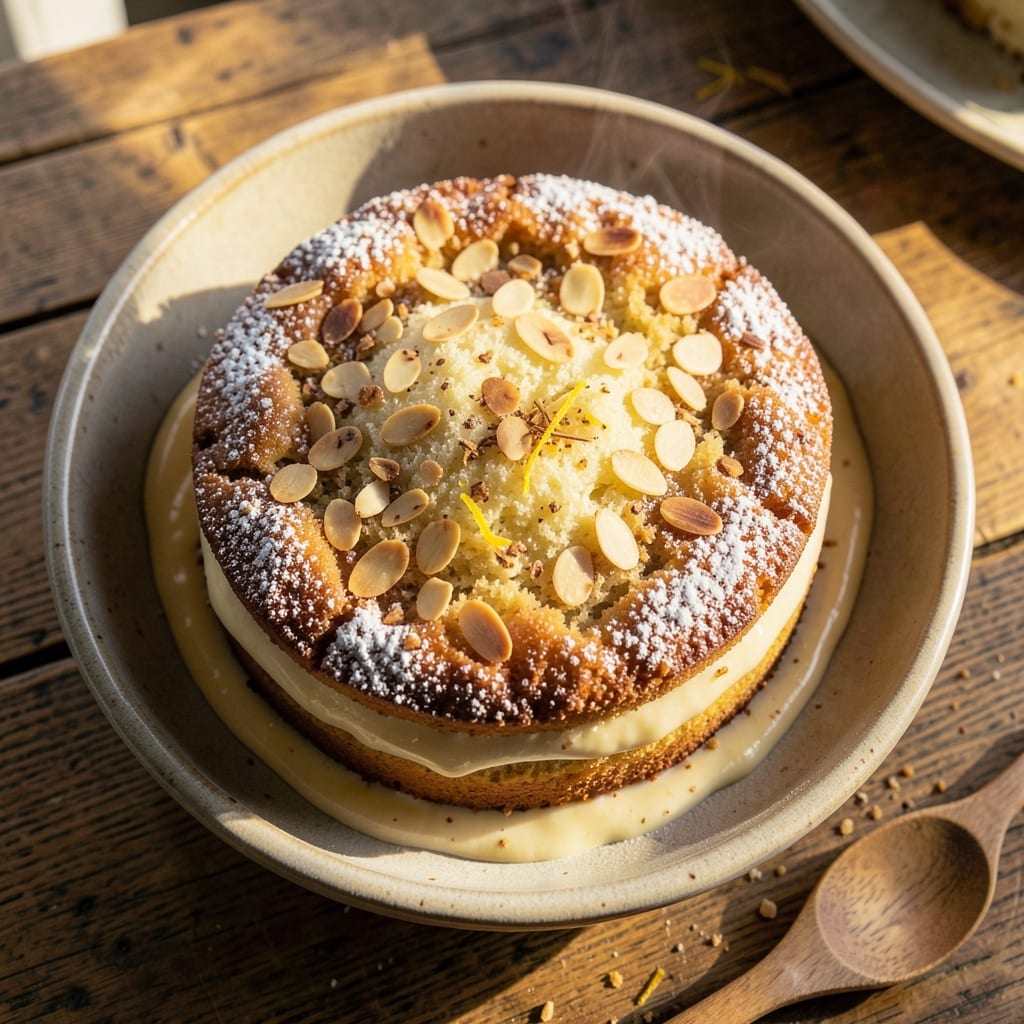
This almond custard coffee cake delivers layers of buttery crumb, rich custard swirls, and toasted almond flavor in every bite. The secret lies in a perfectly balanced custard filling—creamy yet firm—that stays luscious even after baking. I’ve perfected this recipe over years of testing, ensuring the cake rises just enough to hold those nutty swirls without collapsing.
The recipe begins with a tender cake base that’s baked until golden, then slashed for the custard to peek through beautifully. The almond custard itself combines eggs, sugar, toasted almonds, and heavy cream for a velvety texture that contrasts perfectly with the cake’s crisp edges. A simple coffee glaze ties everything together, adding depth and a subtle caramelized finish.
What makes this coffee cake truly special is how it balances textures—flaky layers, creamy custard, and a hint of coffee bitterness. It’s elegant enough for brunch but simple enough for a weekend treat. The aroma alone will fill your kitchen with warmth, and the first slice reveals why this becomes the centerpiece of any dessert spread.
Serve warm with a dusting of powdered sugar or a drizzle of coffee syrup for extra indulgence. The recipe scales easily, making it perfect for gatherings or a solo dessert craving. Here’s how to create this showstopper from start to finish.
Ingredients for almond custard coffee cake
Buttery layers, nutty custard swirls, and a coffee glaze finish—this cake delivers restaurant-quality dessert in one perfect package.
| Ingredient | Amount | Notes |
|---|---|---|
| All-Purpose Flour 🌾 | 3 cups | Sifted for light texture |
| Granulated Sugar 🍚 | 1 ½ cups | White sugar preferred |
| Unsalted Butter 🧈 | 1 cup | Cold, cubed for layers |
| Large Eggs 🥚 | 2 whole | Room temperature |
| Heavy Cream 🥛 | 1 cup | Full-fat for richness |
| Toasted Sliced Almonds 🌰 | 1 ½ cups | Skin-on preferred |
| Powdered Sugar 🍚 | ½ cup | For coffee glaze |
| Instant Espresso Powder ☕ | 1 tbsp | Or strong brewed coffee |
| Vanilla Extract 🌿 | 1 tsp | Pure extract preferred |
| Baking Powder 🍞 | 1 ½ tsp | Aluminum-free |
| Salt 🧂 | ½ tsp | Fine sea salt |
| Milk 🥛 | ½ cup | Whole milk preferred |
| Cornstarch 🌾 | 1 tbsp | For custard stability |
| Lemon Zest 🍋 | 1 tsp | Freshly grated |
The almonds are non-negotiable here. Toast your own in a dry pan over medium heat for 3-4 minutes until golden—don't walk away, they burn fast. Trader Joe's sells pre-toasted slices, but fresh-toasted has that nutty aroma that's impossible to beat. For the flour, King Arthur is my go-to for consistent results, but any all-purpose works. The butter should be cold when you cut it into the dry ingredients—this creates those flaky layers that make this cake special. If your kitchen runs warm, chill the dough for 30 minutes before baking.
No instant espresso powder? Strong brewed coffee works too—just cool it completely before mixing. Running short on heavy cream? Half-and-half plus 1 tbsp butter mimics the richness. The custard filling can be made ahead and refrigerated for up to 2 days, but bring it to room temperature before folding into the cake. For a deeper almond flavor, toast the nuts with a pinch of cinnamon. And if you're feeling fancy, swap the powdered sugar glaze for a coffee syrup drizzle—just mix equal parts powdered sugar and brewed coffee, then thin with a splash of milk.
This cake keeps beautifully for 3 days at room temperature wrapped in plastic, but it's best enjoyed fresh. For make-ahead convenience, bake the cake base and custard filling separately, then assemble just before serving. The custard can be frozen for up to 3 months—thaw in the fridge overnight. If you're prepping for a crowd, double the recipe and bake in a 9x13-inch pan instead of two 8-inch rounds. The coffee glaze sets quickly, so work fast when applying it—drizzle while the cake is still slightly warm for that perfect caramelized finish.
Why You'll Love This Recipe
- One-Bowl Wonder: I swear by this trick—just toss everything into one bowl, fold it in, and bake. No measuring cups flying everywhere or last-minute egg shell mishaps. The heavy cream and butter blend so smoothly, you’ll wonder why you ever did things the hard way.
- Creamy Crunch Magic: That almond custard layer? Chef’s kiss. The toasted almonds on top add a nutty crunch, while the custard underneath stays velvety—like biting into a fancy pastry, but with the simplicity of a home kitchen. Honestly, the first time I sliced into it, I nearly dropped the plate.
- Weekday Breakfast or Dessert: Between us, this cake is my go-to for lazy mornings and Sunday brunch. Serve it warm with a drizzle of honey for breakfast, or dust it with powdered sugar for an after-dinner treat. (Yes, even on a Tuesday night when you’re too tired to think.)
- Budget-Friendly Luxury: You’d pay $12 for a slice at a café, but this recipe costs me pennies. The almonds add richness without breaking the bank, and the leftovers? Spot-on. They stay moist for days—perfect for stashing in the fridge when company drops by unexpectedly.
Step-by-step instructions for almond custard coffee cake
Mastering this coffee cake requires precision in layering and timing for perfect texture.
Prepare the Coffee Cake Batter
In a large mixing bowl, combine the 3 cups all-purpose flour, 1.5 cups granulated sugar, 1.5 tsp baking powder, and 0.5 tsp salt. Whisk gently to distribute the dry ingredients evenly, ensuring no lumps remain. This forms the base structure of the cake.
In a separate bowl, beat the 1 cup unsalted butter and 2 whole large eggs until smooth and creamy. Gradually add the 1 cup heavy cream and mix until fully incorporated. This creates the rich, moist foundation that prevents dryness in the finished cake.
Slowly pour the wet mixture into the dry ingredients while mixing on low speed. Add the 1 tbsp instant espresso powder and 1 tsp vanilla extract, mixing just until combined. The batter should be thick but pourable—this consistency ensures proper layering without sinking.
Create the Almond Custard Filling
In a medium saucepan, combine the 1 cup heavy cream, 0.5 cup milk, 1 tbsp cornstarch, and 0.5 cup granulated sugar. Whisk constantly over medium heat until the mixture thickens to a pudding-like consistency, about 5-7 minutes. This creates the silky custard that will contrast beautifully with the cake layers.
Remove from heat and stir in the 1 tsp lemon zest and 1.5 cups toasted sliced almonds. The almonds should be evenly distributed throughout the custard. Let the mixture cool completely before using—this prevents melting when combined with the cake batter.
Assemble the Coffee Cake Layers
Preheat your oven to 350°F and grease a 9-inch round cake pan generously with butter. Pour half of the cake batter into the prepared pan and spread evenly. Dollop spoonfuls of the cooled almond custard mixture over the batter, then gently swirl with a knife to create marbled patterns.
Add the remaining cake batter on top of the custard, spreading it evenly. The layers should be consistent in thickness to ensure even baking. Sprinkle the remaining 1.5 cups toasted sliced almonds evenly over the top for added texture and visual appeal.
Bake to Golden Perfection
Bake the coffee cake in the preheated oven for 45-50 minutes, or until a toothpick inserted into the center comes out clean. The edges should be golden brown, and the top should have a slightly crisp texture. If the top browns too quickly, tent loosely with aluminum foil after 30 minutes to prevent over-browning.
Remove from the oven and let the cake cool in the pan for 10 minutes. This resting period allows the layers to set before transferring to a wire rack. For the final touch, dust the warm cake generously with 0.5 cup powdered sugar using a fine-mesh sieve for an elegant presentation.
Pro Tips For Making Almond Custard Coffee Cake
- Whisk Eggs Until Cold: The custard in this cake relies on proper egg incorporation—whisk them in the cold bowl until fully emulsified before adding heat. I learned this the hard way when my custard curdled; now I use a double boiler and stir constantly until the mixture thickens to a pudding-like consistency, about 10 minutes past when it looks "done." ---
- Sift Flour Like a Pro: Don’t just dump that flour—sift it directly into the dry ingredients to avoid lumps in the batter. I used to measure and stir, and my cake always had a slightly dense texture. Sifting also aerates the flour, which makes the cake lighter, especially when paired with the heavy cream. ---
- Don’t Overmix the Batter: Once you fold in the almonds or any wet additions, stop mixing after just 10-12 strokes. Overmixing develops gluten, and your cake will turn tough instead of tender. I know it’s tempting to get it "perfect," but this cake thrives on a gentle touch. ---
- Bake at 325°F, Not Higher: This isn’t a high-heat cake—325°F is non-negotiable for even baking without a dry crust. I used to crank it to 350°F to rush things, and the top would brown too fast while the center stayed undercooked. A toothpick inserted in the center should come out with a few moist crumbs, not wet batter.
Common mistakes when making perfect results
Overmixing the Batter
The moment you overmix that cake batter, you're inviting dense, tough layers instead of the tender crumb we want. Stop mixing as soon as the flour disappears—your goal is to combine just until smooth, not create a gluey mess. I've ruined cakes this way more times than I'll admit, but trust me, a few extra seconds of mixing can turn a perfect cake into a brick. 🌾
Skipping the Resting Time
That 10-minute rest in the pan after baking isn't optional—it's crucial for letting the layers set properly. Cutting into the cake too soon causes the custard to ooze out and the layers to collapse. I learned this the hard way when I impatiently sliced into a cake that was still too hot, and the custard ran everywhere like a melted ice cream disaster.
Uneven Custard Distribution
Dolloping the custard randomly and hoping for the best? That's a recipe for uneven pockets of custard and dry spots. Use a spoon to create even dollops across the batter, then gently swirl with a knife to create those beautiful marbled patterns. I once had a cake where the custard was all piled in one corner—needless to say, it wasn't pretty or delicious.
Overbaking the Cake
That toothpick test is your best friend, but don't keep it in there like you're interrogating the cake. A clean toothpick means done—no need to add another 5 minutes just because you're worried. Overbaking dries out the cake and turns those beautiful custard swirls into something sad and crumbly. The edges should be golden, not burnt, and the center should spring back slightly when pressed.
Using Cold Ingredients
Cold butter and eggs are the silent saboteurs of perfect coffee cake. Room temperature ingredients blend smoothly and create that light, fluffy texture we all crave. I keep my eggs on the counter for 30 minutes before starting, and I let the butter sit out overnight in the fridge door. Cold ingredients can cause the batter to seize up and create dense pockets in the cake.
Ignoring the Almond Toast
Store-bought almonds might be convenient, but they lack that fresh-toasted aroma and crunch that makes this cake special. Toast your almonds in a dry pan over medium heat for 3-4 minutes, stirring constantly, until they're golden brown. Watch them like a hawk—they go from perfect to burnt faster than you can blink. The flavor difference is night and day, and it's worth the extra 5 minutes of attention.
Nutrition facts
Frequently asked questions
Can I make this coffee cake without almonds?
You can substitute almonds with 1.5 cups chopped walnuts or pecans for a different nutty flavor, but the texture will change slightly. For a nut-free version, omit the almonds entirely and add 1 tsp almond extract to the custard for flavor. The cake will still be delicious but lose its signature crunch and visual appeal.
How do I store leftovers?
Keep the cake wrapped in plastic at room temperature for up to 3 days or refrigerate for 5 days. For longer storage, freeze slices in an airtight container for up to 3 months. Thaw overnight in the fridge—never at room temperature. The custard may firm up slightly but softens when warmed.
Why did my custard turn grainy?
Grainy custard usually means the mixture wasn't stirred constantly enough while heating or cooled too quickly. Always whisk vigorously over medium heat until thickened, then cool gradually. If it happens, blend briefly with an immersion blender for a smoother texture. For next time, whisk in the cornstarch with cold cream first to prevent lumps.
Can I make this in a different pan size?
Yes! For a 9x13-inch pan, use the full recipe but bake at 325°F for 40-45 minutes. For two 8-inch rounds, divide the batter and custard evenly. Adjust baking time to 35-40 minutes per round. The key is maintaining consistent layer thickness—thinner layers bake faster than thicker ones.
What's the best way to serve it?
Warm slices are ideal! Dust with powdered sugar and serve with a drizzle of coffee syrup or fresh berries. For a special touch, sprinkle with toasted coconut flakes or a pinch of cinnamon. The coffee glaze sets best when the cake is slightly warm—apply it just before serving for that perfect caramelized finish.