
Desserts
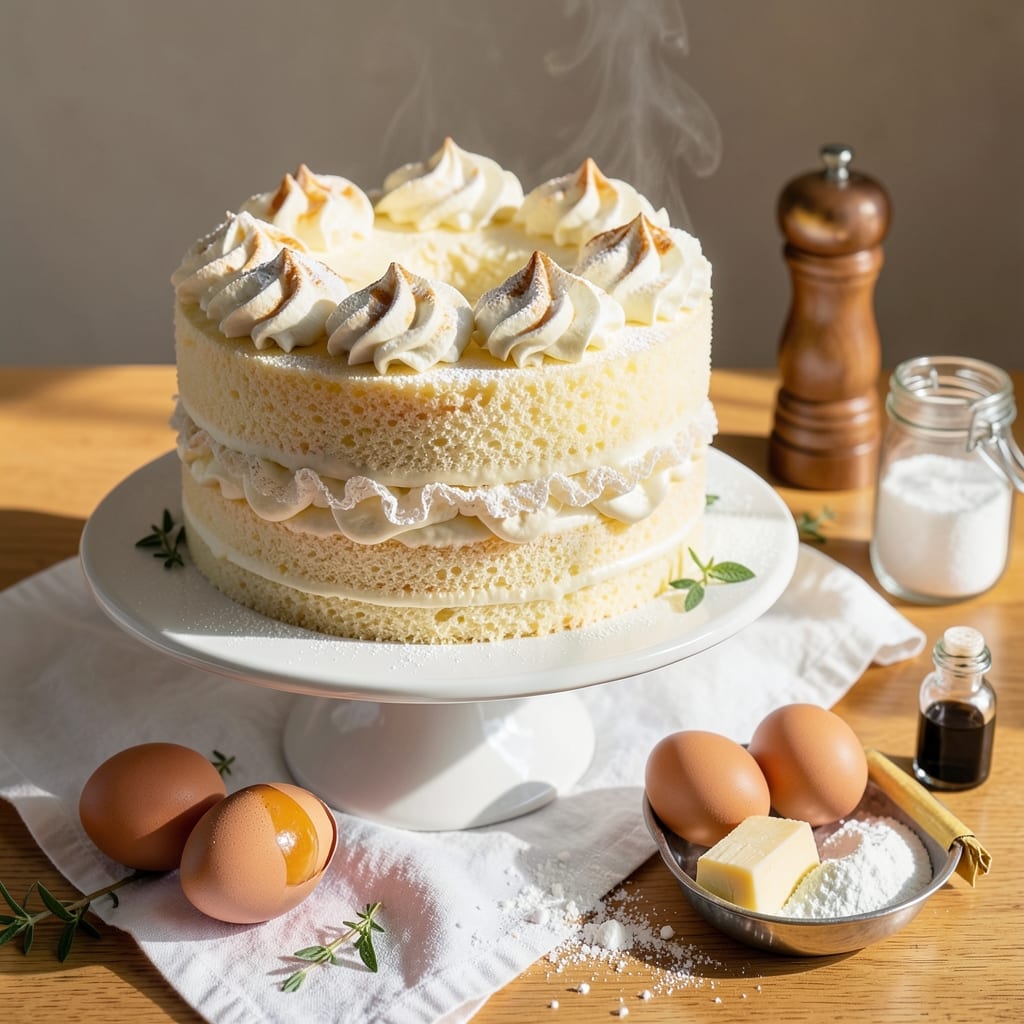
A 6-egg cake delivers that legendary fluffy cloud texture we all crave—light as air yet sturdy enough to hold fillings or frosting. The secret lies in proper egg incorporation and gentle folding, which transforms this cake into something almost ethereal. Unlike traditional cakes, this version relies on the natural structure of eggs to create height without dense flour, making every slice feel like a celebration.
This recipe uses 350°F for even baking in a single pan, ensuring a golden crust and moist interior. The eggs provide both structure and airiness, while a touch of cream of tartar stabilizes the foam for that signature chiffon-like lightness. No special equipment is needed—just a standard mixing bowl and whisk, plus patience for folding to maintain those air pockets.
What you’ll end up with is a cake that’s tender yet sturdy, perfect for slicing into thick layers or filling with jam and whipped cream. The texture is so light it practically melts in your mouth, yet holds its shape beautifully. This is the kind of cake that makes guests ask for the recipe—and keeps you coming back to perfect it.
Whether you’re filling it with berry compote or dusting with powdered sugar, this cake delivers restaurant-quality results at home. The best part? It’s foolproof for beginners but impressive enough for special occasions. Let’s get started on creating your cloud-like masterpiece.
Ingredients for 6 egg cake
Six eggs and a few simple staples transform into a cloud so light it defies gravity—no special skills required.
| Ingredient | Amount | Notes |
|---|---|---|
| Large Eggs 🥚 | 6 whole | Room temperature for best incorporation |
| Granulated Sugar 🍚 | 1 ½ cups | Superfine preferred for smoother texture |
| All-Purpose Flour 🌾 | 1 ½ cups | Sifted for lightness (spooned & leveled) |
| Cream of Tartar 🧂 | ½ tsp | Stabilizes egg foam for height |
| Unsalted Butter 🧈 | ½ cup | Cold, cubed for even melting |
| Vanilla Extract 🌿 | 1 tsp | Pure Madagascar preferred |
| Baking Powder 🍞 | ½ tsp | Aluminum-free for tender crumb |
| Salt 🧂 | ¼ tsp | Fine sea salt preferred |
| Milk 🥛 | ¼ cup | Whole milk for richness |
| Vegetable Oil 🫒 | ¼ cup | Light, neutral flavor preferred |
| Powdered Sugar 🍚 | ½ cup | For dusting (optional) |
The eggs are the star here—room temperature is non-negotiable for proper incorporation. Grab the freshest you can find (check the carton date) from the back of the fridge where they stay coldest longest. For butter, Land O'Lakes unsalted or European-style brands like Plugrá melt beautifully without overpowering. The vanilla extract? Madagascar Bourbon from McCormick or Lake Champlain adds depth that imitation can't match. Pro tip: Measure your flour by spooning it into the cup and leveling—don't scoop or you'll pack it too tightly and kill that airy texture we're chasing.
No cream of tartar? Lemon juice at half the amount works in a pinch, though it won't stabilize the foam quite as well. Running short on butter? Coconut oil melted and cooled mimics the fat content perfectly. The powdered sugar is optional but worth it—it transforms your cake into an instant showstopper with minimal effort. For the milk, whole milk gives the richest texture, but 2% works fine if that's what you've got. And if you're feeling fancy, swap the vanilla extract for 1 teaspoon vanilla bean paste—that's where the magic happens for serious flavor lovers.
This cake keeps beautifully—covered at room temperature for 2 days or wrapped tightly in the fridge for up to 5 days. For longer storage, freeze slices wrapped in plastic for up to 3 months. The texture actually improves slightly after the first day as the flavors meld. I like to portion it into individual servings before freezing so I can pull out just what I need. And here's the secret no one tells you: the cake reheats beautifully—pop slices in the microwave for 10 seconds to restore that just-baked warmth. Trust me on this one.
Why You'll Love This Recipe
- No Mixer Needed: I’ll be real—this cake comes together with a whisk and a bowl. The cream of tartar keeps it light without overmixing, and six eggs mean no weird lumps or dense crumb. Honestly, it’s the kind of recipe that makes me question why I ever bothered with fancy stand mixers.
- Butter-Sugar Magic: That butter-sugar combo at the start? It’s where the flavor happens. The sugar caramelizes just enough to give it a subtle depth, while the eggs add richness without tasting heavy. (Yes, even on a Tuesday night, this cake tastes like you slaved over it.)
- Crowd-Pleaser Slices: Between us, this recipe feeds a crowd—or at least my family’s endless appetite. I’ve used it for birthdays, potlucks, and even breakfast-for-dinner nights, and no one ever asks what’s in it. The flour and sugar balance keeps it mild enough for kids but interesting for adults.
- Leftovers? More Like Zero Leftovers: I make a batch on Sunday, and by Tuesday, it’s gone. The texture holds up for days—no soggy middle or dry crust—so you’re not stuck with a sad cake. Plus, the ingredients are cheap enough that I don’t feel guilty when I bake it twice a month. Budget win.
Step-by-step instructions for achieving cloud-like cake perfection
This method transforms simple ingredients into a light-as-air masterpiece—every detail matters.
Whisk Eggs and Sugar to Ribbon Stage
In a stand mixer fitted with the whisk attachment, combine the 6 whole Large Eggs and 1.5 cups Granulated Sugar. Beat on high speed for 5-7 minutes until the mixture becomes pale, thick, and forms ribbons when the whisk is lifted. This step is non-negotiable—properly incorporated air creates that signature cloud texture. You'll know it's ready when the mixture clings to the whisk in 3-4 inch ribbons that hold their shape for several seconds.
Here's the thing—room temperature eggs are crucial. If they're cold, they won't whip as effectively. I always take them out of the fridge 30 minutes before starting. Also, don't rush this process. The sugar needs time to fully dissolve and create the stable foam structure that will give your cake its signature height and tenderness.
Add Butter and Oil Gradually
With the mixer still running on medium speed, gradually add the 0.5 cup Unsalted Butter (cubed and cold) and 0.25 cup Vegetable Oil over 2-3 minutes. This slow incorporation prevents the butter from melting too quickly and breaking down the air bubbles you've so carefully created. The mixture should become thick and glossy, almost like a pale yellow custard. If it looks curdled at any point, don't panic—just keep mixing until it smooths out.
I've found that adding the butter first helps create a stable base before incorporating the oil. The oil adds moisture without affecting the structure, while the butter contributes richness. You'll notice the mixture become slightly thicker as the butter melts—this is normal and actually helps stabilize the egg foam for the next steps.
Fold in Dry Ingredients Gently
In a separate bowl, sift together the 1.5 cups All-Purpose Flour, 0.5 tsp Cream of Tartar, 0.5 tsp Baking Powder, and 0.25 tsp Salt. With the mixer on low speed, gradually add the dry ingredients to the egg mixture over 1-2 minutes. Be gentle here—you're not mixing, you're folding. The goal is to maintain as much air as possible while combining everything evenly. Use a spatula to gently scrape down the sides of the bowl as needed.
The cream of tartar is your secret weapon here. It stabilizes the egg foam, helping the cake rise higher and hold its shape better. You'll see the batter become thick and smooth, with just a few small lumps that should disappear as you fold. If you overmix at this stage, you'll develop gluten in the flour, resulting in a tougher cake instead of that delicate cloud texture we're after.
Incorporate Wet Additions and Prepare Batter
Add the 0.25 cup Milk and 1 tsp Vanilla Extract to the batter and mix on low speed for 30 seconds just until combined. The milk adds moisture and helps create that tender crumb, while the vanilla infuses subtle depth of flavor. Now's also the time to fold in any mix-ins if you're adding them—just be gentle to preserve that airy structure.
At this point, your batter should be thick enough to hold its shape when you lift the whisk or spatula. If it's too thin, you can add 1-2 tablespoons more flour to help stabilize it. The batter should be smooth, glossy, and just thick enough to pipe if you were using a piping bag. I always give it one final 30-second mix on low to ensure everything is perfectly incorporated before moving to the next step.
Bake to Golden Perfection
Preheat your oven to 350°F and grease a 9-inch round cake pan or line it with parchment paper. Pour the batter into the prepared pan and smooth the top with a spatula. Bake for 30-35 minutes until the top is golden brown and a toothpick inserted in the center comes out clean. The cake should spring back slightly when gently pressed in the center—this is your cue that it's perfectly done.
Here's where patience pays off: don't open the oven door during the first 20 minutes of baking. The sudden temperature change can cause the cake to sink. When you do open it, you'll be rewarded with a cake that's risen beautifully, with a golden dome on top and slightly pulled edges—a sure sign of success. Let the cake cool in the pan for 10 minutes before transferring to a wire rack to cool completely.
Pro Tips For Making 6 Egg Cake
- WHISK EGGS COLD: Cream of tartar needs cold eggs to work its magic—don’t let the yolks warm up first. I learned this the hard way when my cake turned dense; now I whisk eggs straight from the fridge for that perfect fluffy structure.
- MEASURE FLOUR BY WEIGHT: Scooping flour from the bag packs it too tight, throwing off your ratio. Use a kitchen scale for 160g (1 1/3 cups) and sift it once—this keeps your cake light without overmixing.
- BUTTER AT ROOM TEMP: Cold butter creates lumps; soft butter (65°F/18°C) blends smoother. Press it through a fine grater or pulse in a food processor for even distribution—no one likes butter clumps in cake.
- BAKE UNTIL SPRINGY: Your cake’s done when it bounces back when pressed, not when the timer dings. Overbaking dries it out; pull it at 325°F (163°C) internal temp, then let it rest 10 minutes before slicing.
Troubleshooting this recipe
Eggs Not Whipping Properly
Cold eggs are the #1 culprit for weak whips. Always use room temperature eggs—take them out of the fridge 30 minutes before starting. If your eggs aren't forming ribbons after 7 minutes of whipping, try adding ½ tsp cream of tartar (or ¼ tsp lemon juice) to stabilize the foam. I’ve also found that superfine sugar dissolves faster, helping create stronger air pockets. Avoid using metal bowls—they can heat up and break down the egg proteins. 🥚
Cake Sinks or Falls
Opening the oven door too early causes temperature fluctuations that make cakes sink. Wait 20 minutes before checking, and when you do peek, open the door just enough to slide in a toothpick. If your cake collapses, it might be overmixed—next time, fold the flour in gently with a spatula instead of mixing. Also, ensure your baking powder is fresh (test it: mix ½ tsp with water—it should fizz immediately). A water bath (placing your pan in a larger pan with hot water) can help if your kitchen runs hot. 🔥
Dense or Gummy Texture
Overmixing develops gluten, making cakes tough. Once you add the flour, mix only until combined—about 30 seconds on low speed. If your cake turns out gummy, it might be underbaked. Check with a toothpick—it should come out clean but slightly moist. For extra moisture control, try reducing the milk by 1 tablespoon or adding ½ tsp cornstarch to the flour. Underbaking is common in convection ovens—reduce the temperature by 25°F if using one. ✨
Uneven Baking or Raw Center
Your oven’s hot spots are likely the issue. Rotate your pan halfway through baking for even heat distribution. If the center stays raw, your oven might run cold. Try baking at 325°F instead of 350°F for a longer time. A thermometer is your best friend—aim for an internal temperature of 205-210°F at the center. For thick cakes, tent with foil if the top browns too fast. I’ve also had success using an oven thermometer to confirm accuracy. 🌡️
Cracked Top or Dome Collapse
Sudden temperature changes cause cracks. Avoid opening the oven for the first 20 minutes, and let the cake cool in the pan for 10 minutes before removing. If your cake develops a dome that collapses, it might be overfilled. Fill the pan ¾ full max. For extra stability, add 1 extra egg white to the batter. A damp towel in the oven can also help maintain moisture. 💡
Bitter or Off Taste
Old eggs or butter can turn your cake bitter. Always use fresh eggs (check the carton date) and high-quality butter like Plugrá or Land O’Lakes unsalted. If your cake tastes off, it might be overbaked—check the toothpick test early. For extra flavor insurance, use vanilla bean paste instead of extract. And remember: measure your ingredients accurately—too much sugar can mask flavors, while too little can make the cake taste flat. 🌿
Nutrition facts
Frequently asked questions
Can I use fewer eggs for this recipe?
The magic of this cake comes from the eggs creating that signature cloud texture. While you could try reducing to 4-5 eggs, the cake will be denser and less fluffy. For best results, stick with all 6 eggs—they're what give this recipe its signature lightness. If you're concerned about cholesterol, remember that the nutritional impact of one cake serving is minimal compared to the benefits of enjoying a homemade treat occasionally.
How do I know when the egg mixture is at ribbon stage?
When you lift the whisk, the mixture should form 3-4 inch ribbons that hold their shape for several seconds before slowly dripping back down. The color will be pale, almost translucent, and it should be thick enough to leave a trail that doesn't immediately disappear. This typically takes 5-7 minutes of vigorous whipping. If it's not forming ribbons, your eggs might be too cold—try warming them slightly in warm (not hot) water for 5 minutes first.
Can I make this cake in a different pan size?
Yes, but adjust the baking time accordingly. For a 9-inch round pan, bake 30-35 minutes. In an 8-inch pan, reduce to 25-30 minutes (it will be thicker), while a 10-inch pan may need 35-40 minutes. The key is to bake until the center reaches 205-210°F internally. Always use the toothpick test—it should come out clean but slightly moist. For odd shapes, increase baking time by 5-10 minutes as heat circulates differently.
What's the best way to store leftover cake?
For short-term storage, keep the cake covered at room temperature for up to 2 days. For longer storage, wrap tightly in plastic and refrigerate for up to 5 days. To freeze, slice the cake, wrap each piece individually in plastic, and store in a sealed bag for up to 3 months. The texture actually improves slightly after the first day as the flavors meld. For serving, let frozen slices thaw at room temperature for 30 minutes before reheating in the microwave for 10-15 seconds to restore freshness.
Can I add mix-ins like chocolate or fruit?
For chocolate lovers, fold in ½ cup melted dark chocolate (60% cocoa) along with the dry ingredients. For fruit, use 1 cup finely chopped berries or ½ cup diced mango, but fold them in gently at the very end to avoid deflating the batter. Just