
Desserts
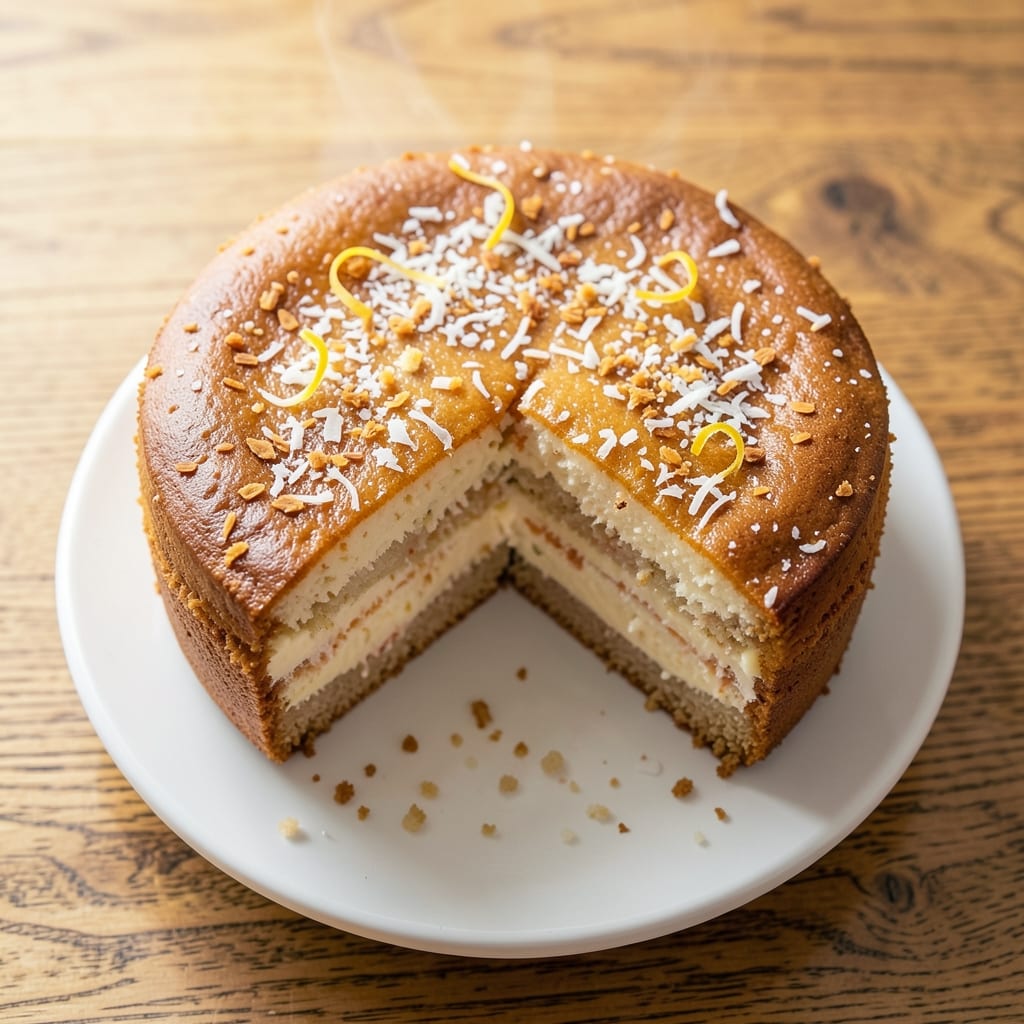
This 6-inch coconut cake recipe delivers tropical flavors in every bite—moist vanilla layers wrapped in toasted coconut crunch. The secret lies in blending coconut milk with buttermilk for unmatched tenderness, while toasted coconut flakes on top add irresistible texture. Perfect for small gatherings or a single indulgent slice, this cake balances sweetness and nuttiness without being overly heavy.
What sets this recipe apart is the foolproof technique that ensures a perfectly moist crumb without drying out. The cake bakes in just 30 minutes at 350°F, yielding a golden dome with a crackly coconut crown. No fancy equipment needed—just a standard pan and a few simple ingredients that come together effortlessly. The frosting, made with coconut cream, ties everything together with a velvety finish.
By the time you pull it from the oven, you'll have a cake that's light yet rich, with flavors that transport you to a tropical paradise. The toasted coconut on top adds a satisfying crunch that contrasts beautifully with the soft layers beneath. This isn't just dessert—it's an experience that will have everyone asking for seconds. Ready to bake?
Serve it warm with a scoop of vanilla ice cream or enjoy it at room temperature for a delightful texture contrast. The 6-inch size makes it ideal for small celebrations or a special treat for two. Here's how to make it perfectly every time.
Ingredients for 6 inch coconut cake
Tropical flavors start with these 14 ingredients—each playing its part in moist layers and toasted coconut crunch.
| Ingredient | Amount | Notes |
|---|---|---|
| All-Purpose Flour 🌾 | 1 ½ cups | Sifted for even distribution |
| Granulated Sugar 🍚 | 1 cup | White or light brown |
| Unsalted Butter 🧈 | ¾ cup | Room temperature, cubed |
| Coconut Milk (Full-Fat, Canned) 🥥 | 1 can | Chilled overnight for cream |
| Buttermilk 🥛 | ½ cup | Substitute with milk + 1 tsp vinegar |
| Vanilla Extract 🌿 | 2 tsp | Pure Madagascar preferred |
| Baking Powder 🧂 | 2 tsp | Diamond Crystal preferred |
| Salt 🧂 | ½ tsp | Fine sea salt preferred |
| Shredded Coconut (Sweetened) 🥥 | 1 cup | Toasted for enhanced flavor |
| Unsweetened Shredded Coconut 🥥 | ½ cup | For topping, toasted golden |
| Large Eggs 🥚 | 2 whole | Room temperature for blending |
| Coconut Cream (Canned) 🥥 | ½ cup | From chilled coconut milk |
| Powdered Sugar 🍚 | 1 cup | Sifted for smooth frosting |
| Lemon Zest 🍋 | 1 tsp | Freshly grated for brightness |
The coconut milk is non-negotiable—full-fat canned brands like Thai Kitchen deliver that rich, creamy texture. Chill it overnight so you can separate the thick coconut cream from the lighter milk; the cream becomes your frosting, while the milk keeps the cake tender. For the butter, Plugrá or Land O'Lakes unsalted work best—room temperature is key. If you can't find sweetened shredded coconut, unsweetened plus 1 tsp sugar mimics the flavor. The baking powder matters too—Diamond Crystal is more potent than generic brands, so don't double it.
No buttermilk? Mix 0.5 cup milk with 1 tsp vinegar or lemon juice and let sit 5 minutes. Substituting coconut milk for buttermilk? Use 0.5 cup coconut milk plus 0.5 cup plain yogurt for tang. For the frosting, if you can't separate coconut cream, blend chilled coconut milk until thickened—it's not as stable but works in a pinch. The lemon zest adds brightness; if you're out, 1/4 tsp lemon extract works, but fresh is always better. For the coconut topping, toast it in a dry pan over medium heat until golden—this transforms it from bland to irresistible.
Store the cake in an airtight container at room temperature for 2 days—it actually improves as flavors meld. For longer storage, wrap tightly and refrigerate for up to 1 week, though texture may shift slightly. The frosting keeps 3 days refrigerated—whip it back lightly before serving. Freeze the unfrosted cake for up to 1 month—thaw overnight in the fridge before adding frosting. Toasted coconut loses crunch fast, so add it fresh when serving.
Why You'll Love This Recipe
- No Mixer Needed: I swear by this cake—just fold the dry ingredients into the wet, pour, and bake. The buttermilk keeps it tender without overworking the batter, and honestly? My stand mixer stays quiet for this one.
- Tropical Twist: That canned coconut milk isn’t just flavor—it’s magic. The cake stays moist for days, with a subtle sweetness that doesn’t overpower, and the butter gives it just enough richness to feel indulgent, not heavy.
- Party in a Pan: Six inches might sound small, but it’s perfect for potlucks, office celebrations, or even a last-minute dessert when you’re hosting. Slice it into squares, and suddenly you’ve got a crowd-pleaser that won’t break the bank.
- Budget-Friendly Luxury: Full-fat coconut milk and butter make it taste like a bakery cake, but the ingredients are cheap enough to bake twice in a month. Leftovers? They disappear faster than you can say “second slice.”
Step-by-step instructions for tropical coconut cake
Master this method for a perfectly moist crumb and nutty toasted coconut finish every time.
Prepare the Coconut Cream and Toast the Coconut
Open the chilled can of coconut milk and scoop out the thick coconut cream from the top, using exactly the 0.5 cup called for. Set aside in a small bowl. This rich cream is the secret to that ultra-moist texture we're after.
In a dry skillet over medium-low heat, toast the 1 cup shredded sweetened coconut and 0.5 cup unsweetened shredded coconut together for 3-4 minutes, stirring constantly. You'll know it's perfect when the coconut turns a rich golden brown and releases its nutty aroma. Remove immediately and set aside—over-toasting will make it bitter. This step ensures that toasted coconut flavor permeates every bite.
Cream Butter and Sugar for Maximum Moisture
In a stand mixer fitted with the paddle attachment, beat the 0.75 cup unsalted butter and 1 cup granulated sugar on medium speed for 3-4 minutes until light and fluffy. You're looking for a color change from pale to a slightly off-white, with the mixture nearly doubling in volume. This thorough creaming creates air pockets that will keep your cake wonderfully moist.
At this stage, I like to add the 2 tsp vanilla extract and 1 tsp lemon zest to the butter mixture. The citrus zest brightens the coconut flavor while the vanilla adds depth. Mix these in for 30 seconds on low speed to incorporate fully. The zest will infuse the butter with its aromatic oils, ensuring every slice carries that subtle citrus note.
Combine Wet Ingredients and Incorporate Dry Components
In a separate bowl, whisk together the 0.5 cup buttermilk, 2 tsp baking powder, and 0.5 tsp salt. Then, with the mixer on low speed, gradually add this mixture to the butter-sugar blend. Scrape down the sides of the bowl as needed to ensure even distribution. The buttermilk's acidity will react with the baking powder, creating lift that balances the cake's density.
Next, add the 2 whole large eggs, one at a time, mixing just until each is fully incorporated. The eggs provide structure and moisture. Finally, gently fold in the toasted coconut mixture using a spatula—this prevents overmixing which could develop gluten and make the cake tough. The batter should be thick but pourable, with visible coconut flecks throughout.
Bake in a 6-Inch Pan for Perfect Texture
Preheat your oven to 350°F and generously grease a 6-inch round cake pan with butter, then dust with flour. Pour the batter into the prepared pan and smooth the top with a spatula. Bake for 35-40 minutes until a toothpick inserted in the center comes out clean and the edges are pulling away slightly from the pan.
I've found that this smaller pan size concentrates the moisture and flavor, giving you a denser, more decadent cake than you'd get with a larger pan. The cake should have a golden dome on top with a slightly cracked surface—signs of proper baking. If the top browns too quickly, tent loosely with foil after 25 minutes to prevent over-browning while allowing the center to cook through.
Frost and Serve for Ultimate Presentation
While the cake is still warm, prepare the frosting by beating the 0.5 cup coconut cream with the 1 cup powdered sugar until smooth and fluffy. This light coconut cream frosting complements rather than overpowers the cake's flavor. Spread it evenly over the cooled cake, then press the remaining toasted coconut mixture over the top for that signature crunch.
Let the cake cool completely before slicing—this ensures clean cuts and prevents crumbs. The final result should be a moist, tender crumb with pockets of coconut flavor, balanced by the bright lemon zest and topped with that essential toasted coconut crunch. Serve at room temperature for the best texture and flavor experience.
Pro Tips For Making 6 Inch Coconut Cake
- Whisk Butter First: Get that butter and sugar creamy before adding anything else—this isn’t just about aeration, it’s about texture. I used to toss in the flour too soon, and the cake turned out dense. Let the butter sit at room temp for 30 minutes beforehand, then beat it with sugar until it’s pale and fluffy. That’s when the magic starts.
- Shake the Coconut Milk: Canned coconut milk separates like it’s auditioning for a horror movie. Give it a good shake before measuring—even if it looks fine. I learned this the hard way when my first batch had a weird, watery center. Pour it into a measuring cup, then stir in the thick cream from the bottom. No one wants a cake that’s half soup.
- Don’t Overmix the Batter: Once you fold in the buttermilk and flour, stop when the dry ingredients are just incorporated. I know, it looks lumpy, but overmixing glutenizes the flour and turns your cake into a chewy brick. Use a spatula to gently fold—think "marble swirls," not "smooth perfection." Your future self will thank you when it slices cleanly.
- Bake at 325°F: Skip the 350°F impulse and go lower. This cake relies on slow, even cooking to let the coconut flavor meld and the center set properly. I baked mine at 350°F once and ended up with a dry top and a gummy middle. 325°F gives you a moist, tender crumb without waiting forever. Insert pan in the middle rack—no shortcuts here.
Wine and beer pairings for these flavors
Tropical White Wine
For this coconut cake, I reach for dry Riesling or Sauvignon Blanc—both wines have bright acidity that cuts through the richness while complementing the tropical coconut flavors. A German Riesling Kabinett with its crisp citrus notes mirrors the lemon zest in the cake, while a New Zealand Sauvignon Blanc brings herbal complexity that pairs beautifully with the toasted coconut. Keep the temperature chilled at 45-50°F to preserve the wine's refreshing qualities. 🍷
Creamy Dessert Port
If you prefer something sweeter, a Ruby Port or Tawny Port with its caramel and nutty undertones enhances the cake's coconut and vanilla flavors. The 10-year Tawny from Graham's adds a subtle spice that bridges the cake's sweetness and the toasted coconut crunch. Serve it slightly warmed to release its aromatic depth—about 65-70°F. This pairing feels luxurious and balances the cake's tropical sweetness with a sophisticated finish.
Crisp Lager Pairing
A German Pilsner like Warsteiner or Spaten offers a refreshing contrast to the cake's richness. The clean, crisp malt profile and subtle hop bitterness cleanse your palate between bites, making each slice feel lighter. Opt for a 4-5% ABV beer to avoid overwhelming the delicate coconut flavors. Chill it well at 38-42°F for the best experience. This is my go-to pairing when serving the cake at summer gatherings. 🍺
Spiced Rum Cocktail
For a boozy twist, mix dark rum like Appleton Estate with a splash of coconut cream and a dash of orange liqueur for a Coconut Rum Punch. The rum's caramel notes harmonize with the cake's coconut, while the orange adds a zesty brightness. Serve over crushed ice for a refreshing sip that mirrors the cake's tropical essence. This pairing transforms dessert into a full sensory experience. 🥥
Coffee Pairing
If you're serving this cake after dinner, a light roast coffee with hazelnut or coconut milk enhances the flavors without competing. The natural sweetness of the coffee complements the cake's vanilla and coconut, while the hazelnut adds a nutty depth. Brew a pour-over with Hawaiian Kona beans for a subtle tropical note that ties everything together. Serve at 160-170°F for the best balance of acidity and sweetness. ☕
Non-Alcoholic Sparkling Option
For a refreshing non-alcoholic pairing, try San Pellegrino Aranciata or Topo Chico with a splash of grenadine. The citrusy bubbles and light sweetness mirror the cake's lemon zest and coconut flavors without overpowering them. Serve it well-chilled at 38-42°F for a crisp, palate-cleansing accompaniment. This option works beautifully for brunch or daytime gatherings. 🥤
Nutrition facts
Frequently asked questions
Can I make this cake without a stand mixer?
Use a large bowl and hand mixer or even a sturdy whisk. For creaming the butter and sugar, beat them together for 5-7 minutes until light and fluffy—just keep at it until the mixture looks pale and thick. The key is patience; this step is what creates the cake's signature moisture.
Why does my coconut cake turn out dry?
Dryness usually means overbaking or overmixing. Check your oven temperature with an oven thermometer—350°F is critical. Also, don't overmix after adding flour; stir just until combined. The coconut milk and buttermilk combo keeps it moist, so ensure you're using full-fat coconut milk and not substituting with water.
How do I adjust this recipe for a 4-inch or 8-inch pan?
For a 4-inch pan, reduce batter by 1/3 (about 1 cup) and bake 20-25 minutes. For an 8-inch pan, double the batter and bake 45-50 minutes. Always use the same oven temperature and check doneness with a toothpick. The smaller pan concentrates flavor, while the larger pan makes it more generous for gatherings.
Can I substitute coconut milk with dairy milk?
Not recommended—coconut milk's fat content creates that signature moist texture. If you must substitute, use 0.5 cup coconut milk plus 0.5 cup whole milk, but the cake won't be as rich. For the frosting, coconut cream is essential; try blending chilled coconut milk until thickened if you can't find coconut cream.
How long should I let the cake cool before frosting?
Let it cool in the pan for 15 minutes, then transfer to a wire rack to cool completely (1 hour) before frosting. This prevents melting and ensures clean slices. The warm cake releases steam that can make frosting slide off—patience here makes all the difference for presentation!