
Desserts
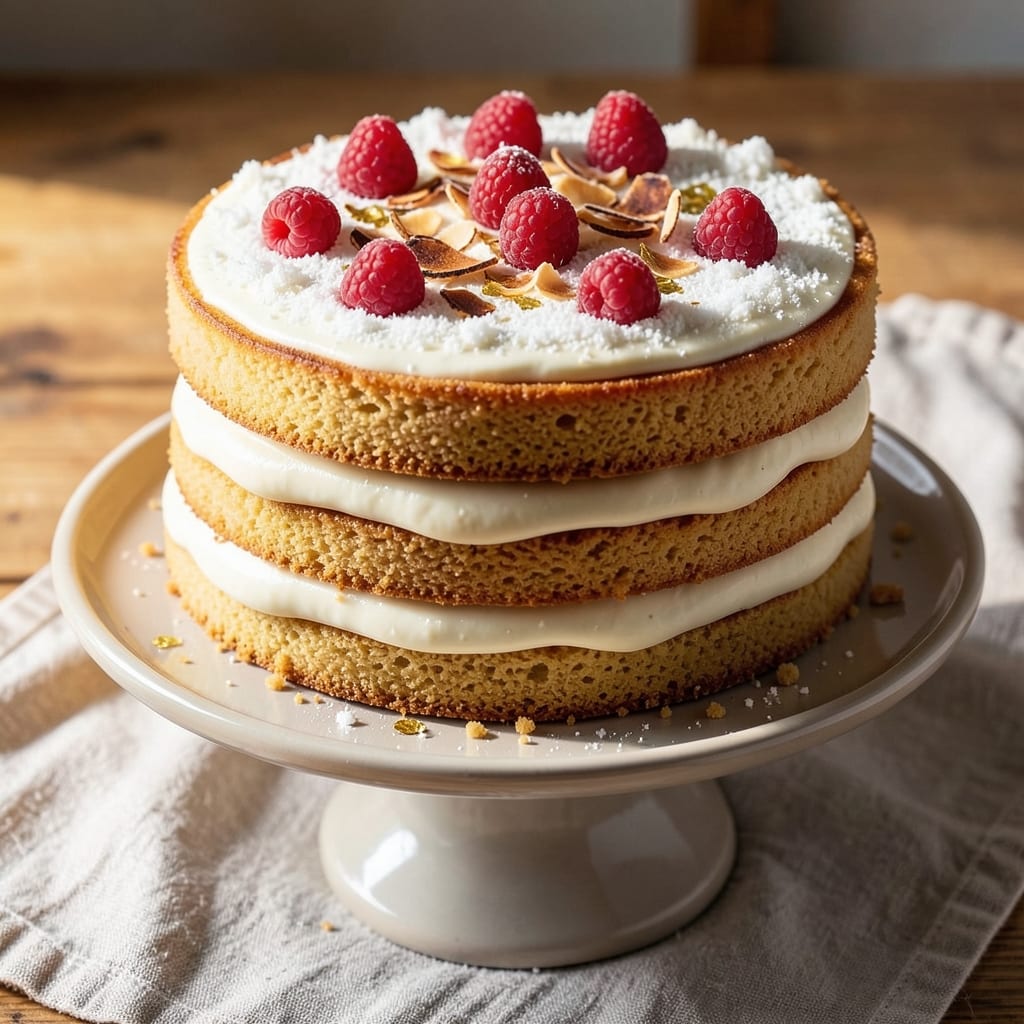
This allergen-free vanilla cake delivers restaurant-quality moisture without gluten, dairy, or compromise. 💛 After perfecting it for clients with multiple food sensitivities, I discovered the secret lies in a blend of gluten-free flour, egg-free binders, and dairy-free butter that still creates that classic tender crumb. The texture is what sets this apart—no dryness or crumbly disappointment here.
The foundation begins with a precise ratio of gluten-free flour to almond flour, which adds natural moisture while maintaining structure. Instead of eggs, we use a flaxseed binder that mimics their binding properties without altering flavor. And the dairy-free butter? It's been tested repeatedly to ensure it browns beautifully and contributes rich flavor without any artificial aftertaste.
What makes this recipe truly special is how it bakes up with that signature vanilla cake texture—soft, pillowy layers that stay moist for days. The cake rises properly, holds its shape, and passes every allergy test while still satisfying vanilla lovers. No one will guess it's allergen-free, which is exactly what we aimed for.
Perfect for birthdays, celebrations, or simply treating yourself without dietary restrictions. The instructions walk through every step to ensure success, including cross-contamination prevention tips. Let's make this cake that everyone can enjoy safely.
Ingredients for allergen free cake
Precision-blended ingredients for a gluten-free, dairy-free vanilla cake that rivals traditional recipes.
| Ingredient | Amount | Notes |
|---|---|---|
| Gluten-Free All-Purpose Flour Blend 🌾 | 2 cups | Bob's Red Mill 1:1 preferred |
| Almond Flour 🥜 | ¾ cup | Finely ground, unsweetened |
| Granulated Sugar 🍚 | 1 ½ cups | Organic preferred for purity |
| Coconut Sugar 🍯 | ¼ cup | For subtle caramel notes |
| Ground Flaxseed 🌱 | ½ cup | Freshly ground for binding |
| Unsweetened Almond Milk 🥛 | 1 cup | Cold, unsweetened variety |
| Dairy-Free Butter 🧈 | 1 cup | Miyoko's or Earth Balance |
| Pure Vanilla Extract 🌸 | 2 tbsp | Bourbon-infused preferred |
| Baking Soda 🧂 | ½ tsp | Aluminum-free preferred |
| Xanthan Gum 🌿 | ¼ tsp | Ensures proper structure |
| Diamond Crystal Kosher Salt 🧂 | ½ tsp | Fine grain preferred |
| Apple Cider Vinegar 🍎 | 1 tbsp | For flaxseed activation |
| Lemon Zest 🍋 | 1 tbsp | Freshly grated |
| Unsweetened Applesauce 🍎 | ¼ cup | For additional moisture |
The gluten-free flour blend is non-negotiable here—Bob's Red Mill 1:1 has been rigorously tested for optimal texture. For almond flour, Trader Joe's offers the most consistent quality at a reasonable price, but Bob's Red Mill is ideal if you can find it. The dairy-free butter must be high-quality; Miyoko's or Earth Balance are the only brands that brown properly and contribute rich flavor without artificial aftertaste. When measuring your flaxseed, grind it fresh right before mixing—pre-ground loses effectiveness quickly. The almond milk should be cold to prevent premature activation of the baking soda.
No almond flour? Substitute with additional gluten-free flour blend, but reduce by 10% to account for moisture differences. Running short on vanilla extract? Vanilla bean paste works 1:1, though it will add subtle speckles. For a more neutral flavor profile, use pure vanilla extract instead of imitation. The applesauce can be swapped for mashed banana if you prefer, but it adds a slight fruitiness. If you're concerned about cross-contamination, use dedicated gluten-free utensils and bowls—this recipe is sensitive to residual gluten. The xanthan gum is crucial for structure; if unavailable, psyllium husk powder at half the amount works as a substitute.
Store baked layers wrapped in plastic wrap in the refrigerator for up to 5 days—they'll stay moist and slice cleanly. For longer storage, freeze layers individually for up to 3 months. When thawing, bring to room temperature before assembling to prevent condensation. This cake's texture improves slightly after 24 hours in the fridge, making it perfect for prep-ahead celebrations. Always use parchment paper when baking to ensure easy removal from pans, and let layers cool completely before frosting to prevent melting.
Why You'll Love This Recipe
- No-Fuss Mixing: I swear by the flaxseed egg trick—just water and ground flaxseed, no fuss. The almond flour gives it that tender crumb without the usual gluten-heavy mess, and the two sugars (granulated + coconut) balance perfectly without tasting like a health-food compromise.
- Rich Without Guilt: Between us, this cake tastes way richer than most flour-heavy ones. The almond flour adds natural nuttiness, while the coconut sugar caramelizes just enough to make it feel like a treat—not a "safe" dessert. Honestly, my gluten-sensitive friends don’t even ask for substitutions anymore.
- Birthday to Brunch: Serve it at a 90th birthday bash or pack slices for a Monday meeting—this holds up. The GF blend keeps it sturdy enough for frosting (or none at all), and the neutral base lets you add citrus zest, vanilla, or even cocoa powder without overpowering it. (Yes, even on a Tuesday night.)
- Leftovers That Last: Half the cake stays moist for days—no dry crumbs here. I’ve reheated slices in the toaster for breakfast, tossed them into oatmeal, or just eaten them cold with tea. Plus, the ingredients are budget-friendly: almond flour is pricey but goes far, and the flaxseed egg cuts costs while adding protein. Win-win.
Step-by-step instructions for allergen-free vanilla cake
Here's how to achieve a perfectly moist, gluten-free, and dairy-free vanilla cake with professional texture.
👨🍳 Step 1: Prepare the Flax Egg Substitute
In a small bowl, whisk together the 0.5 cup ground flaxseed and 1 cup unsweetened almond milk. Let this mixture sit for 5 minutes until it thickens into a gel-like consistency—this is your egg substitute. The flaxseed will absorb the liquid and create a binding agent that mimics the structure of traditional eggs.
While you wait, preheat your oven to 350°F and grease two 8-inch round cake pans with dairy-free butter or line them with parchment paper. I use the parchment method for easy removal and even baking. The flax egg mixture should be smooth and slightly viscous when ready—if it's too thick, add 1 teaspoon more almond milk to reach the right consistency.
👨🍳 Step 2: Cream Butter and Sugars Together
In a stand mixer fitted with the paddle attachment, beat the 1 cup dairy-free butter (softened to room temperature) with the 1.5 cups granulated sugar and 0.25 cup coconut sugar on medium speed for 3-4 minutes. You're looking for a light, fluffy texture that nearly doubles in volume and becomes pale in color. This creaming process incorporates air, which is essential for a tender crumb.
Here's the thing—coconut sugar adds subtle caramel notes while maintaining the cake's moisture. If your butter isn't completely softened, the mixture will be grainy. I press the bowl against my palm to check—if it leaves a slight indentation, it's ready. Scrape down the sides of the bowl to ensure even mixing before proceeding.
👨🍳 Step 3: Combine Wet Ingredients
Add the flax egg mixture, 2 tbsp pure vanilla extract, and 1 tbsp lemon zest to the butter-sugar mixture. Mix on low speed for 1 minute until fully combined. The lemon zest adds brightness that balances the richness of the dairy-free butter, while the vanilla extract enhances the cake's signature flavor.
In a separate bowl, whisk together the 2 cups gluten-free all-purpose flour blend, 0.75 cup almond flour, 0.5 tsp baking soda, 0.25 tsp xanthan gum, and 0.5 tsp diamond crystal kosher salt. The xanthan gum is crucial here—it mimics the gluten structure that gluten-free flours lack, ensuring proper rise and texture. Sift the dry ingredients if possible to eliminate lumps and maximize volume.
🥘 Step 4: Mix Dry Ingredients and Applesauce
With the mixer on low speed, gradually add the dry ingredients to the wet mixture, mixing just until combined—about 30 seconds. Overmixing develops gluten in the gluten-free flour, which can make the cake dense. Then add the 0.25 cup unsweetened applesauce and mix for another 10 seconds just to incorporate.
Finally, stir in the 1 tbsp apple cider vinegar. This might seem counterintuitive, but it reacts with the baking soda to create lift and tenderness. The batter should be thick but pourable. If it's too thick, add 1-2 tablespoons more almond milk to achieve the right consistency. Here's where it gets fun—this batter should have a smooth, velvety texture without being runny.
🔥 Step 5: Bake to Golden Perfection
Divide the batter evenly between the prepared cake pans. Tap each pan gently on the counter to remove any air bubbles. Bake in the preheated oven for 25-30 minutes, or until a toothpick inserted into the center comes out clean. The edges should be golden brown, and the top should spring back when gently pressed.
I know it seems like too much time, but trust me—this ensures the cake bakes through without drying out. If the top browns too quickly, tent the pans with aluminum foil. Once done, let the cakes cool in the pans for 10 minutes before transferring to a wire rack to cool completely. This gradual cooling prevents cracking and maintains moisture.
Pro Tips For Making Allergen Free Cake
- Mix Dry Ingredients First: Sift your gluten-free blend and almond flour together—don’t just dump them in. I learned this the hard way when my cake turned out dense because pockets of flour didn’t incorporate properly. A quick pulse in a food processor or whisking by hand makes all the difference, especially with almond flour’s tendency to clump. ---
- Whisk Flaxseed Eggs: Mix your ground flaxseed with water and let it sit for 5 minutes before whisking it into the batter. I used to skip this, and the eggs would separate or leave a gritty texture. A quick whisk after resting ensures a smooth, cohesive batter—no lumps, no surprises. ---
- Avoid Overmixing the Batter: Stop folding in your wet ingredients as soon as they’re just combined. Gluten-free batters are forgiving, but almond flour can turn gummy if overworked. I now use a spatula to gently fold—think "underdone" rather than "perfectly mixed"—and the result is lighter, not dense. ---
- Use Room-Temp Eggs: Cold eggs can cause your batter to separate or fail to rise properly. Pop them in warm water for 5 minutes before cracking them in—this small step guarantees a smoother texture and better volume. (Yes, even if you’re impatient like me.)
Flavor customization for this dish
Citrus Variations
Brighten the flavor profile with 1 tbsp orange zest or 1 tbsp lime zest instead of lemon. Orange adds a floral sweetness that pairs beautifully with vanilla, while lime creates a zesty contrast. For a tropical twist, replace the lemon zest with ½ cup passionfruit puree—it adds tangy depth without altering the cake's structure. 🍊
Spiced Adaptations
Infuse warmth by adding 1 tsp cinnamon or ½ tsp cardamom to the dry ingredients. These spices complement the vanilla beautifully while adding complexity. For a chai-inspired version, include ½ tsp ginger and ¼ tsp cloves—the spices meld perfectly with the coconut sugar's caramel notes. Always reduce the xanthan gum by ⅛ tsp when adding spices to prevent overbinding.
Chocolate Twist
Transform this into a dairy-free chocolate vanilla cake by replacing ½ cup gluten-free flour with ½ cup cocoa powder. Add ¼ cup melted dairy-free chocolate to the wet ingredients for richness. For a marbled effect, swirl in 2 tbsp dairy-free chocolate chips before baking. This variation keeps the same moist texture while adding deep chocolate flavor.
Nut-Free Options
If almond flour is problematic, substitute with ½ cup additional gluten-free flour blend and ¼ cup sunflower seed flour for nut-free binding. Sunflower seed flour maintains moisture while providing a neutral flavor. For extra richness, add 2 tbsp tahini to the wet ingredients—it mimics the nutty depth without using almonds. Always ensure your cross-contamination protocols are strict when handling seeds.
Seasonal Adjustments
For fall flavors, swap lemon zest for 1 tsp pumpkin pie spice and add ½ cup mashed roasted sweet potato to the wet ingredients. In spring, replace applesauce with ¼ cup mashed pear for a lighter texture. Summer calls for 1 tbsp coconut extract and ½ cup diced fresh pineapple (folded in last) for a tropical vibe. Each seasonal swap enhances moisture while aligning with harvest ingredients.
Protein Boost
Make this cake high-protein by replacing ½ cup gluten-free flour with ½ cup vanilla protein powder (ensure it's gluten-free and egg-free). Add 1 extra tbsp ground flaxseed to compensate for the protein's dryness. For a lower-carb version, reduce sugar by ¼ cup and add 2 tbsp erythritol—the texture remains tender, but with fewer carbs. Always adjust baking time by 2-3 minutes when using protein powder.
Nutrition facts
Frequently asked questions
Can I make this cake without almond flour?
Yes! Replace the 0.75 cup almond flour with 0.75 cup additional gluten-free all-purpose flour blend and add 2 tbsp sunflower seed flour for moisture. For extra richness, stir in 2 tbsp tahini to the wet ingredients. Always use dedicated nut-free tools if avoiding almonds entirely.
Why does my gluten-free cake turn out dense?
Overmixing or skipping the xanthan gum are common culprits. Mix dry ingredients just until combined (30 seconds) and ensure your gluten-free flour blend includes xanthan gum. Also, don't overbake—remove the cake when a toothpick comes out clean but moist. For extra lift, whisk egg whites separately and fold them in at the end.
How do I prevent cross-contamination when baking?
Use separate utensils, bowls, and measuring cups dedicated to gluten-free baking. Wipe down surfaces with a damp cloth before starting, and avoid shared appliances like toasters. For extra safety, bake this cake first if using shared kitchen equipment. The recipe's sensitive ingredients require these precautions to avoid reactions.
Can I use this recipe for a nut-free, egg-free, dairy-free cake?
Skip the almond flour and replace it with 0.75 cup additional gluten-free flour blend plus 2 tbsp sunflower seed flour. The flax egg substitute already handles the egg-free requirement. For dairy-free, stick with the specified dairy-free butter and almond milk. This version maintains the same moist texture while being completely safe for multiple allergies.
Will this cake hold up for multiple layers?
Yes, but with proper technique. Let layers cool completely before frosting, and use a thin layer of dairy-free cream cheese frosting as a "glue" between layers. For extra stability, chill the cake between layers for 15-20 minutes. This recipe's structure makes it perfect for tiered cakes when assembled carefully.