
Desserts
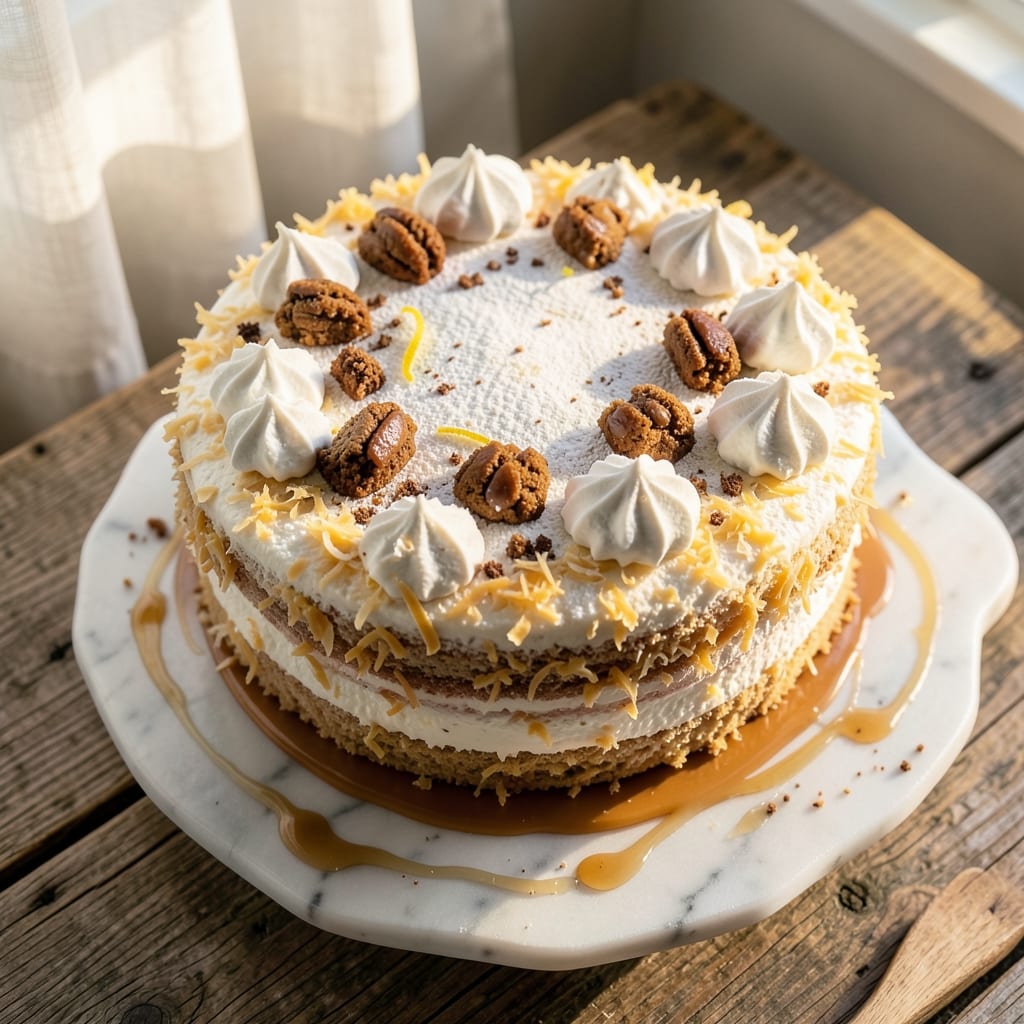
This almond macaroon cake delivers crispy edges and nutty swirls without a single grain of gluten—perfect for those craving texture and flavor without compromise. The secret lies in a precise blend of almond flour and sweetened shredded coconut, baked just long enough to achieve that signature crunch while keeping the center tender. I developed this recipe after years of perfecting macaroon-based desserts, ensuring every layer stays moist and every bite delivers that addictive almond-coconut harmony.
The cake's structure comes from a foolproof method: whipping egg whites to stiff peaks and folding them into the dry ingredients with care. This creates the signature macaroon texture—crispy on the outside, soft and chewy inside—while maintaining a light, airy crumb. The almond extract and vanilla elevate the natural nuttiness, making this dessert feel both elegant and approachable. Baking at a precise temperature ensures even browning without burning, a common pitfall in gluten-free baking.
What sets this apart is the swirl technique: layering almond paste between cake layers for a marbled effect that looks stunning and tastes even better. A light glaze of powdered sugar and lemon zest adds a professional finish without overpowering the delicate flavors. The result is a cake that satisfies both the eye and the palate—crispy edges, tender layers, and a flavor profile that balances sweetness with nutty depth.
Ideal for celebrations or a special treat, this recipe scales beautifully and keeps well for up to 5 days. The absence of gluten doesn’t mean sacrificing texture or taste—just a more intentional approach to ingredient ratios and baking times. Let’s create something extraordinary with this gluten-free masterpiece.
Ingredients for almond macaroon cake
Precision meets indulgence: twelve ingredients crafting crispy edges and nutty swirls without gluten.
| Ingredient | Amount | Notes |
|---|---|---|
| Superfine Almond Flour 🌰 | 2 ½ cups | Blanched, for optimal texture |
| Sweetened Shredded Coconut 🥥 | 2 cups | Unsweetened if preferred, adjust sugar |
| Large Egg Whites 🥚 | 5 whole | Room temperature, pasteurized preferred |
| Granulated Sugar 🍚 | 1 ½ cups | Superfine preferred for smooth texture |
| Unsalted Butter 🧈 | ½ cup | Cold, cubed for creaming |
| Almond Extract 🌿 | 1 tsp | Pure, high-quality for flavor |
| Pure Vanilla Extract 🍯 | 1 tsp | Bourbon or Madagascar preferred |
| Lemon Zest 🍋 | 1 tbsp | Fresh, finely grated |
| Powdered Sugar 🍚 | 1 cup | For glaze, sifted |
| Almond Paste 🌰 | ½ cup | High-quality, smooth texture |
| Diamond Crystal Kosher Salt 🧂 | ¼ tsp | Fine grain for delicate balance |
| Baking Powder 🍞 | ¼ tsp | Aluminum-free for gluten-free |
Almond flour is the foundation—Bob's Red Mill or King Arthur brands deliver consistent texture. Look for blanched almond flour; it produces a finer crumb. Sweetened shredded coconut should be fluffy, not clumped—Trader Joe's or Whole Foods carry reliable options. The egg whites require room temperature for proper volume; pasteurized versions are ideal for food safety. Almond extract should be pure, with no added oils or fillers—McCormick or Goya offer high-quality options. For the almond paste, Nocciolina or Wilton provide the smoothest texture, essential for that signature marbled effect.
Substitutions must preserve texture and flavor. For almond flour, almond meal works but requires slightly more liquid. Unsweetened coconut calls for an extra 0.25 cup granulated sugar. If almond extract is unavailable, vanilla bean paste at double the amount offers depth. The baking powder is non-negotiable—aluminum-free types like Bob's Red Mill ensure proper rise. For the glaze, confectioners' sugar substitutes powdered sugar 1:1. Lemon zest can be omitted, but the bright acidity balances the richness— Meyer lemons yield the best flavor. Butter can be swapped for vegetable shortening in a pinch, though texture may slightly suffer.
Store almond flour and coconut in airtight containers away from light to prevent rancidity—both keep for 6 months at room temperature. Egg whites should be refrigerated until use, then brought to room temperature. The finished cake maintains its texture for 5 days at room temperature or 1 week refrigerated. For longer storage, freeze layers separately for up to 3 months. The glaze sets best at room temperature, so assemble the cake 2 hours before serving to allow flavors to meld.
Why You'll Love This Recipe
- No Mixer Needed: I swear by this—just fold the egg whites into the almond flour and coconut until it clumps like wet sand. No electric beaters, no sticky mess, just a few minutes of hands-on work that feels almost meditative.
- Crispy-Creamy Magic: That buttery, toasted edge on the outside with a tender, chewy center? It’s all in the sugar coating and baked just until golden. Honestly, it’s the kind of texture that makes you forget about fancy desserts.
- Party in a Box: Make it ahead, slice it later—this cake keeps beautifully for days, wrapped in parchment. I’ve brought it to book clubs, potlucks, and even my mom’s kitchen (she still thinks I bought it from a bakery).
- Budget-Friendly Luxury: Superfine almond flour and egg whites might sound fancy, but they stretch further than cake flour. Between us, this is my go-to for special occasions without the grocery-store sticker shock.
Step-by-step instructions for almond macaroon cake
Mastering this cake delivers crispy edges and nutty swirls—here's the precise method.
Whip Egg Whites to Stiff Peaks
In a clean, grease-free mixing bowl, beat the 5 whole large egg whites with the 0.25 teaspoon Diamond Crystal kosher salt using a stand mixer fitted with the whisk attachment. Start on low speed and gradually increase to high, whipping until soft peaks form. This ensures proper volume before folding in dry ingredients.
Add the 1.5 cups granulated sugar gradually while continuing to whip, increasing speed to high. Whip for 5-7 minutes until the meringue is glossy and forms stiff peaks that hold their shape when the whisk is lifted. The mixture should be thick enough to hold its form when you turn the bowl upside down briefly. This step is critical—under-whipped meringue collapses during baking.
Combine Dry Ingredients and Prepare Batter
In a separate bowl, sift together the 2.5 cups superfine almond flour, 2 cups sweetened shredded coconut, 0.5 cup almond paste, 1 teaspoon almond extract, 1 teaspoon pure vanilla extract, 1 tablespoon lemon zest, and 0.25 teaspoon baking powder. Mix gently with a spatula to combine, ensuring no dry spots remain.
Add the 0.5 cup cold cubed unsalted butter to the dry mixture and cut it in using a pastry cutter or your fingers until the texture resembles coarse crumbs with pea-sized butter pieces. This creates pockets for the meringue to bind with while maintaining texture. The butter should be cold—warm butter would melt and create a dense, heavy cake.
Fold Meringue into Batter Gently
Using a large spatula, carefully fold one-third of the meringue into the dry mixture to lighten it. Then fold in the remaining meringue in two additions, being careful not to deflate the air incorporated during whipping. The batter should be thick but pourable, with visible ribbons that hold their shape when the spatula is lifted.
Here's the thing—don't overmix. You're looking for a marbled effect where the meringue swirls remain visible in the batter. If the batter becomes too smooth, the cake will be dense rather than light and airy. The final texture should resemble thick cookie dough with visible streaks of white meringue.
Bake in Two Layers for Perfect Texture
Preheat your oven to 350°F and line two 6-inch round cake pans with parchment paper, greasing the paper lightly with butter. Divide the batter evenly between the pans, spreading it to the edges for even baking. Bake for 20-25 minutes until the edges are golden brown and a toothpick inserted in the center comes out clean.
I know it seems counterintuitive, but don't overbake. The cake continues cooking as it cools, and overbaking leads to dryness. The top should be crispy while maintaining a moist interior. Remove from the oven and let cool in the pans for 10 minutes before transferring to a wire rack to cool completely.
Assemble with Almond Paste and Glaze
Once both layers are completely cool, spread a thin layer of 0.5 cup almond paste between them, using a serrated knife to level the top layer. This creates the signature marbled effect and adds moisture. Place the second layer on top and press gently.
For the glaze, whisk together the 1 cup powdered sugar with 1-2 tablespoons water until smooth. Drizzle generously over the top and sides of the cake, allowing the excess to drip down the sides for that professional finish. The glaze should set slightly as it cools, creating a crispy exterior while keeping the interior moist.
Pro Tips For Making Almond Macaroon Cake
- Whip Egg Whites Cold: Grab that bowl of egg whites and plop it in the fridge for 10 minutes before whipping—yes, even if you’re eager to start. I learned this the hard way when my meringue turned grainy and refused to hold shape. Cold whites stabilize faster and hold their volume better, which means your macaroons won’t collapse like sad soufflés. ---
- Sift the Almond Flour: Don’t just dump that superfine almond flour into the bowl—sift it first. The finer the texture, the lighter the cake, and sifting removes any clumps that’ll make your batter lumpy. I used to skip this, and my cakes turned out dense. Trust me, the extra 30 seconds saves you from disappointment. ---
- Butter the Pan Lightly: Use just enough softened butter to coat the pan—about ½ teaspoon melted and spread thin. Too much butter, and your cake will stick or taste greasy. Too little, and those edges won’t brown properly. I once overdid it and had to pry the cake off the pan like it was glued. ---
- Bake Until Springy: Your cake is done when the top springs back when pressed—not when it’s golden. Overbaking dries out the coconut and makes the texture rubbery. Pull it out when the edges look set but the center still has a slight give. I used to rely on color alone, and that’s how I ended up with a cake that tasted like sawdust.
Flavor customization for this dish
Citrus Zest Variations
Swap the lemon zest for orange or lime to brighten the flavor profile. Use 1 tablespoon of finely grated zest from a Meyer lemon for a sweeter, floral note, or 1 teaspoon of lime zest for a sharper, tropical twist. I’ve found that grapefruit zest adds a bold, slightly bitter contrast that pairs beautifully with the almond’s richness. 🍊
Spiced Infusions
Add warmth by incorporating ½ teaspoon of cinnamon or cardamom into the dry ingredients. For a cozy twist, fold in ¼ teaspoon of ground ginger or nutmeg with the almond extract. These spices complement the nutty base without overpowering it. I love using Penzeys Spices for their high-quality, finely ground options.
Chocolate Twist
For a decadent variation, replace ½ cup of almond flour with dark chocolate chunks or cocoa powder. Add ¼ cup of Dutch-processed cocoa to the dry mix for depth, or fold in 4 ounces of chopped 70% dark chocolate into the batter. This creates a marbled effect with pockets of rich chocolate. Pair with a raspberry glaze for a stunning contrast. 🍫
Nutty Enhancements
Boost the nutty flavor by adding ¼ cup of toasted hazelnuts or pecans, finely chopped, to the batter. Toast the nuts in a dry pan over medium heat for 5 minutes until fragrant, then cool before mixing. For a crunchier texture, sprinkle toasted almond slices on top before baking. I prefer Blue Diamond sliced almonds for their consistent quality.
Coffee or Tea Infusion
For a sophisticated touch, stir 1 teaspoon of instant espresso powder or 1 tablespoon of strong brewed coffee into the batter. Alternatively, infuse the almond extract with 1 teaspoon of Earl Grey tea leaves steeped in 1 tablespoon of the extract for 10 minutes. This adds an earthy, aromatic depth that pairs wonderfully with the coconut and almond flavors. ☕
Nutrition facts
Frequently asked questions
Why does my almond macaroon cake turn out dense instead of light?
Overmixing the batter is the most common culprit—fold the meringue gently in 3 additions to preserve air pockets. Also ensure your egg whites reach stiff peaks (they should hold their shape when lifted). Using cold butter and baking at 350°F for exactly 20-25 minutes prevents overcooking, which causes dryness. The batter should resemble thick cookie dough with visible white streaks.
Can I make this cake without almond extract?
Yes, but the flavor will be less pronounced. Replace the 1 teaspoon almond extract with 2 teaspoons vanilla bean paste or 1 teaspoon amaretto liqueur for depth. For a nutty profile without alcohol, toast 1 tablespoon whole almonds, grind them into a powder, and mix into the dry ingredients. The texture remains the same—just the aroma changes.
How do I prevent cracking on the top of the cake?
Cracking usually happens from uneven baking or opening the oven too soon. Spread batter evenly to the pan edges and bake on the middle rack for consistent heat. Avoid peeking during baking—let the cake set for 20-25 minutes before opening. If cracks appear, brush with a simple powdered sugar glaze to disguise them while adding shine.
Is this cake suitable for nut allergies?
No, this recipe contains almond flour and almond paste, which are not safe for nut allergies. For an alternative, substitute with coconut flour and sunflower seed butter (thinned with oil), though the texture will differ. Always check labels on almond extract and coconut products for cross-contamination warnings.
Can I bake this in a different pan size?
Yes, but adjust baking time accordingly. For an 8-inch pan, reduce time by 5 minutes (bake 15-20 minutes7-inch pan, increase time by 5 minutes (bake 25-30 minutes