
Desserts
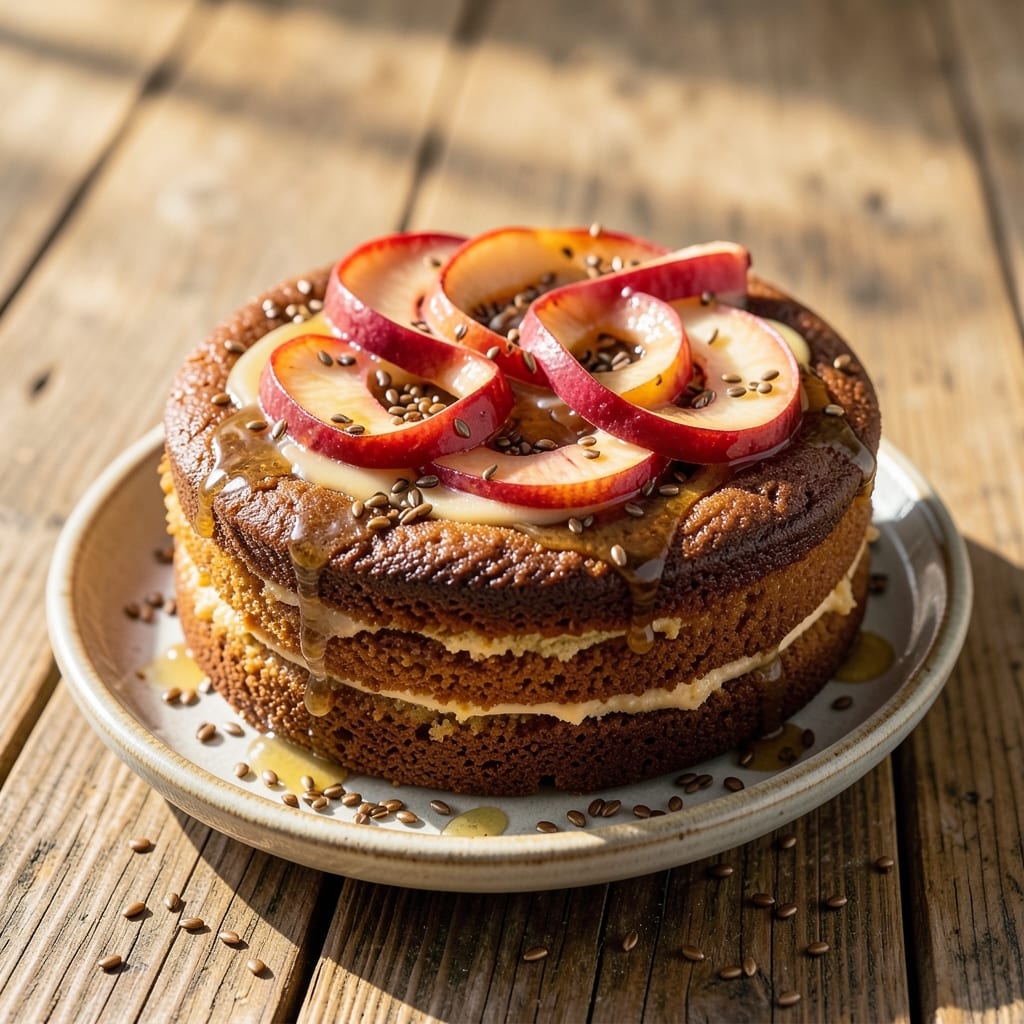
This gluten-free amaranth cake delivers a nutty depth and moist crumb that rivals traditional flour-based desserts—without a hint of gluten. 🌾 The secret lies in amaranth flour's unique texture, which creates a tender yet sturdy cake with a subtle earthiness that pairs beautifully with citrus or chocolate toppings. I developed this recipe after discovering how versatile amaranth could be in baking, transforming it into a plant-based dessert that's both elegant and approachable.
The baking process is straightforward but requires attention to detail: 350°F for 40-45 minutes ensures a golden top while keeping the center perfectly set. Unlike dense grain cakes, this one stays light thanks to a combination of baking powder and applesauce for moisture without dairy. The nutty flavor shines through, making it a standout for vegan diets or anyone seeking gluten-free alternatives with serious texture.
What sets this recipe apart is its versatility—top with lemon glaze for brightness, dark chocolate ganache for indulgence, or keep it simple with powdered sugar. The crumb remains tender for days, making it ideal for meal prep or special occasions. Whether you're baking for dietary needs or simply exploring ancient grains, this cake proves amaranth belongs in modern desserts.
Perfect for brunch, potlucks, or a satisfying afternoon treat, this recipe delivers restaurant-quality results at home. The instructions are clear, the ingredients accessible, and the outcome consistently impressive. Let's bake this nutty, gluten-free masterpiece together.
Ingredients for amaranth cake
Amaranth flour and plant-based liquids create this gluten-free cake's signature nutty depth and tender crumb.
| Ingredient | Amount | Notes |
|---|---|---|
| Amaranth Flour 🌾 | 1 ½ cups | Gluten-free, finely milled preferred |
| Almond Milk 🥛 | 1 cup | Unsweetened, room temperature |
| Applesauce 🍎 | ½ cup | Unsweetened, smooth texture |
| Coconut Oil 🥥 | ½ cup | Melted, not butter substitute |
| Granulated Sugar 🍚 | ¾ cup | Organic preferred for purity |
| Maple Syrup 🍁 | ¼ cup | Grade B for richer flavor |
| Baking Powder 🧂 | 2 tsp | Aluminum-free for best rise |
| Salt 🧂 | ½ tsp | Fine sea salt preferred |
| Vanilla Extract 🌿 | 1 tsp | Pure, alcohol-free preferred |
| Lemon Zest 🍋 | 1 tbsp | Fresh, fine-grade preferred |
| Lemon Juice 🍋 | 2 tbsp | Freshly squeezed |
| Powdered Sugar 🍚 | ½ cup | For glaze, sifted |
| Lemon Glaze Liquid 🍋 | 2 tbsp | Fresh lemon juice |
The amaranth flour is the star here—Bob's Red Mill or Ancient Harvest brands deliver the finest texture. Look for finely milled varieties to avoid grittiness in your cake. If you can't find amaranth flour, buckwheat flour works in a pinch at a 1:1 ratio, though the flavor will differ slightly. The almond milk should be unsweetened and room temperature—cold milk can make the batter too dense. For extra richness, consider using homemade almond milk with a pinch of salt.
No applesauce? Unsweetened applesauce from a jar works fine, but fresh is ideal for texture. The coconut oil must be melted—solid oil won't mix properly—so either melt it in the microwave for 30 seconds or use it straight from the jar if it's liquid at room temperature. For the glaze, powdered sugar should be sifted to avoid lumps, and fresh lemon juice makes all the difference. If you're avoiding refined sugar, maple powder or coconut sugar can replace the granulated sugar at a 1:1 ratio, though the texture may be slightly denser.
Store the cake in an airtight container at room temperature for up to 3 days—it actually improves as it sits. For longer storage, freeze slices wrapped in parchment for up to 3 months. The glaze can be made ahead and stored in the fridge for 1 week. To reheat, wrap slices in a damp paper towel and microwave for 10 seconds—this restores moisture without making the cake soggy. The cake's nutty flavor pairs beautifully with dark chocolate ganache or berry compote for added indulgence.
Why You'll Love This Recipe
- No Mixer Needed: I swear by this recipe when I’m in a rush—just whisk the amaranth flour with almond milk and applesauce until smooth, then fold in the coconut oil. No blender, no fancy tools, just a bowl and a spoon. Honestly, it’s the kind of cake that makes me feel like a baking genius.
- Moist Without Grease: That applesauce swap for oil? It keeps the cake tender without tasting heavy, and the coconut oil adds just enough richness to balance the earthy amaranth. Between us, it’s the kind of cake that stays soft for days—no dry crumbs here.
- Breakfast or Dessert: Serve it warm with a drizzle of honey for a quick breakfast, or dust it with cinnamon and a dollop of yogurt for a dessert that won’t guilt you out. I’ll be real: my kids ask for it at both meals, and I’ve never had to explain why.
- Pantry Staple Magic: Amaranth flour is cheap, almond milk lasts forever, and applesauce uses up fruit before it spoils. This cake is my go-to when I’m trying to stretch ingredients without sacrificing flavor—plus, leftovers? They disappear faster than I can say “second slice.”
Step-by-step instructions for gluten-free amaranth cake
Master this nutty, moist cake with precise technique and professional timing.
👨🍳 Step 1: Prepare the Wet Ingredients
In a medium mixing bowl, combine the 1 cup almond milk, 0.5 cup applesauce, 0.5 cup melted coconut oil, 0.75 cup granulated sugar, and 0.25 cup maple syrup. Whisk vigorously until fully emulsified—you should see a smooth, homogeneous mixture without any streaks of oil. This step ensures even distribution of moisture throughout the batter.
Next, stir in the 1 tbsp lemon zest and 2 tbsp lemon juice until completely dissolved. The citrus brightens the amaranth's earthy notes while adding subtle complexity. I like to use a fine-mesh strainer for the zest to avoid any bitter pith. The mixture should now have a vibrant golden hue and a fragrant citrus aroma.
👨🍳 Step 2: Combine Dry Ingredients and Create the Batter
In a separate large bowl, sift together the 1.5 cups amaranth flour, 2 tsp baking powder, and 0.5 tsp salt. This sifting step prevents lumps and ensures even baking. Make a well in the center of the dry ingredients and pour in the wet mixture. Add the 1 tsp vanilla extract and gently fold with a spatula until just combined—you should still see some flour streaks.
Overmixing develops gluten, which we're avoiding since this is gluten-free. The batter should be thick but pourable, with a consistency similar to pancake batter. If it looks too thick, add 1-2 tablespoons of almond milk to achieve the right texture. The amaranth flour absorbs moisture differently than wheat flour, so don't be afraid to adjust slightly.
🔥 Step 3: Bake Until Golden and Springy
Preheat your oven to 350°F and grease an 8-inch round cake pan with coconut oil or line it with parchment paper. Pour the batter into the prepared pan and smooth the top with a spatula. Bake for 35-40 minutes until a toothpick inserted in the center comes out clean and the edges are golden brown.
Here's the thing—amaranth cakes can dry out if overbaked. The moment the toothpick test passes is your cue to remove it from the oven. The cake will continue cooking slightly as it cools. For even baking, place a baking sheet on the middle rack to catch any potential drips from the coconut oil.
⏰ Step 4: Cool and Prepare the Lemon Glaze
Allow the cake to cool in the pan for 15 minutes before transferring it to a wire rack to cool completely. This gradual cooling prevents cracking. While it cools, prepare the lemon glaze by whisking together the 0.5 cup powdered sugar and 2 tbsp lemon glaze liquid (fresh lemon juice) until smooth. The glaze should be thick enough to coat the back of a spoon.
For best results, I recommend straining the glaze through a fine-mesh sieve to remove any lumps. The glaze will add brightness and moisture to the cake's surface. If the glaze seems too thick, add 1-2 drops of almond milk to achieve a pourable consistency.
🍽️ Step 5: Glaze and Serve
Once the cake is completely cool, carefully pour the lemon glaze over the top and let it drip slightly down the sides. Use a spatula to spread any excess glaze evenly. The cake should have a glossy finish with a vibrant citrus hue. For presentation, I like to dust the top with an additional 1 tsp powdered sugar for a snowy effect.
Slice into 8 equal wedges and serve immediately. The texture should be moist and tender with a slight crumb that's characteristic of amaranth. The lemon glaze adds a refreshing contrast to the cake's nutty depth, making each bite balanced and satisfying. Store any leftovers in an airtight container for up to 3 days at room temperature.
Pro Tips For Making Amaranth Cake
- MIX DRY FIRST: Amaranth flour absorbs liquid like a sponge—if you add the almond milk too soon, you’ll end up with a gummy mess. Whisk the dry ingredients (flour, sugar, baking powder) until no lumps remain before stirring in the wet ingredients. I learned this the hard way after scraping a sticky glob off my mixer blade.
- MELT COCONUT OIL FULLY: Cold coconut oil turns the batter into a weird, clumpy sludge. Microwave it for 20 seconds or melt it in a small bowl over simmering water, then let it cool slightly before mixing. Your future self will thank you when the cake turns out tender instead of dense.
- DON’T OVERMIX THE BATTER: Amaranth flour releases gluten when overworked, and suddenly your light cake turns into a chewy brick. Mix just until combined—about 15 strokes with a spatula—and stop before you start thinking about kneading. The batter will look lumpy, but that’s normal.
- USE ROOM-TEMP APPLESAUCE: Cold applesauce makes the cake sink in the middle like a sad soufflé. Warm it in the microwave for 30 seconds or let it sit at room temp for 10 minutes. The texture stays consistent, and the cake rises properly—no guessing games with a collapsed center.
Perfect pairings for this recipe
Citrus Brightness
The lemon glaze isn't just decoration—it's the star of this cake's flavor profile. The 2 tbsp fresh lemon juice in the glaze cuts through amaranth's natural earthiness, creating a perfect balance. For extra zing, add ½ tsp lemon extract to the glaze mixture. I once made this cake with bottled lemon juice and noticed the flavor lacked depth—always use fresh! 🍋
Chocolate Indulgence
For a decadent twist, top the cooled cake with ½ cup dark chocolate ganache (melt 6 oz dark chocolate with ¼ cup coconut cream and let it set). The rich cocoa pairs beautifully with amaranth's nutty notes. I recommend using 70% cacao chocolate for a sophisticated balance. Drizzle the ganache over the glaze or create a marbled effect for visual appeal.
Berry Complements
Fresh berries add vibrant color and tart contrast to the cake's sweetness. Try raspberry compote (simmer 1 cup raspberries, 2 tbsp maple syrup, and 1 tsp lemon juice until thickened) or blueberry reduction (cook 1 cup blueberries with 1 tbsp sugar until syrupy). Spoon over slices just before serving to keep the cake's texture intact.
Creamy Contrasts
For a luxurious touch, serve with coconut whipped cream (whip 1 cup chilled coconut cream with 1 tbsp powdered sugar until fluffy). The light texture contrasts perfectly with the dense yet tender cake. I also love pairing it with vanilla coconut yogurt for a lighter option that still complements the amaranth's nutty flavor.
Spiced Accents
Warm spices elevate this cake's earthy profile. Dust with ½ tsp cinnamon or cardamom before serving, or add ¼ tsp ginger to the glaze. These spices create a cozy, aromatic experience that works especially well during cooler months. A pinch of sea salt on top enhances all the flavors—trust me, it makes a difference! 🌟
Warm Beverage Pairings
Warm drinks enhance the cake's nutty depth. A cup of chai tea (especially masala chai with cinnamon and cardamom) complements the spices beautifully. For coffee lovers, cold brew with a splash of almond milk cuts through the richness. I also enjoy it with spiced apple cider** during fall—it's a match made in dessert heaven.
Nutrition facts
Frequently asked questions
Can I substitute amaranth flour with another gluten-free flour?
Amaranth flour gives this cake its signature nutty depth and tender crumb, but you can try buckwheat flour (1:1 ratio) or a blend of almond flour and coconut flour (replace 1 cup amaranth with ½ cup almond + ¼ cup coconut). The texture will differ slightly—amaranth creates a more delicate crumb, while buckwheat adds a denser, earthier flavor. For best results, stick with amaranth flour if possible.
Why does my amaranth cake turn out dense instead of moist?
Dense texture usually means overmixing or insufficient moisture. Gently fold the batter just until combined (flour streaks should remain), and ensure you've melted the coconut oil completely. If the batter looks too thick, add 1-2 tablespoons of almond milk—amaranth flour absorbs more liquid than wheat flour. Also, avoid overbaking: remove the cake when the toothpick test passes (around 40 minutes at 350°F). The cake firms up as it cools.
Can I make this cake without applesauce?
Yes! Replace the 0.5 cup applesauce with 0.3 cup unsweetened applesauce + 0.2 cup mashed banana for moisture, or use 0.5 cup unsweetened coconut yogurt for tang. For a neutral option, try 0.5 cup mashed sweet potato (cooked and cooled) or 0.4 cup aquafaba (chickpea brine) for a vegan binder. The texture may vary slightly, but the cake will still hold together.
How do I store leftovers to keep them fresh?
Store the cake in an airtight container at room temperature for up to 3 days—it actually improves as it sits! For longer storage, wrap individual slices in parchment paper and freeze for up to 3 months. To reheat, microwave for 10 seconds (wrap in a damp paper towel to restore moisture without sogginess). The lemon glaze can be made ahead and stored in the fridge for 1 week—just whisk before using.
What’s the best way to serve this cake for special occasions?
For a restaurant-worthy presentation, layer the cake with dark chocolate ganache (melt 6 oz 70% cacao chocolate with ¼ cup coconut cream) or top with fresh berry compote (simmer 1 cup raspberries with 2 tbsp maple syrup). Dust with powdered sugar and garnish with toasted coconut flakes or edible flowers for elegance. Serve with spiced chai tea or cold brew** to complement the nutty flavors.